


Kanchenjunga Circuit Trek
Kanchenjunga (8,586 m), the third-highest mountain in the world, lies in the north-eastern part of Nepal. It is known as the “Five Great Treasures of Snow.” Since its first ascent, many travelers have dreamed of seeing the majestic Kanchenjunga peaks up close. The Kanchenjunga Circuit Trek is a 23-day journey that follows remote, off-the-beaten paths and offers a rare chance to experience rich culture, untouched nature, and very few crowds.
The journey begins with sightseeing in the historic Kathmandu Valley, where ancient temples and cultural heritage sites reveal local myths and traditions. Afterward, we fly to Bhadrapur and drive to Taplejung. The trek starts through lush forests and traditional villages, reaching Lalikharka and then Khesewa, with beautiful views from Phumphe Danda. Continuing through forests, we arrive at Mamankhe and walk along the banks of the Kabeli Khola to reach Yamphudin.
Crossing suspension bridges and quiet trails, we trek to Tortong and then to Cheram through the scenic Lalung Valley and along the Simbuwa Khola. We spend two nights in Cheram for acclimatization before heading to Ramche, where we can see the impressive Yalung Glacier. After visiting the Oktang Monastery, we continue to the Yalung Base Camp.
From Cheram, the trail leads to the challenging Sele La Pass (4,480 m) and then towards Ghunsa through dense forests. After reaching Ghunsa, we trek to Kambachen and continue over rocky terrain to the Kanchenjunga Base Camp. From here, we enjoy stunning views of the Kanchenjunga range. We then retrace our steps via Lhonak and return to Ghunsa, crossing the Sumbung Khola to reach Amjilosa and Chirwa. Finally, we drive back to Bhadrapur and fly to Kathmandu, marking the end of this remarkable journey.
The Kanchenjunga Circuit Trek is demanding and requires proper planning and experienced guidance. Danphe Adventure Treks, with decades of experience and professional guides, is committed to providing safe, reliable, and high-quality service at a fair price to make your trek memorable and successful.
Trip Highlights
- Visit Kanchenjunga Base Camp and enjoy the panorama of Kanchenjunga ranges
- Tread on the off-beaten challenging paths in the shadows of Kanchenjunga
- Explore the Yalung Glacier and Yalung Base Camp
- Visit some of the illustrious monasteries in the region including Oktang Monastery
- Relish the company of Tibetan influenced Buddhist culture and lifestyle
Trip Itinerary
-
Day 01: Day 01 – Arrival in Kathmandu (1,340m)
After arriving at Tribhuvan International Airport (TIA), you will be warmly welcomed by a company representative and transferred to your hotel. After check-in, you can relax and refresh after your journey. Later in the day, you will attend a detailed trek briefing with our team, where we will explain the itinerary, safety measures, and important information about the trek. Overnight stay at a hotel in Kathmandu.

Accomodation:
Hotel
-
Day 02: Sightseeing in Kathmandu Valley and Trek Preparation (1,400 m)
Explore the major UNESCO World Heritage Sites of the Kathmandu Valley, including Swayambhunath (also known as the Monkey Temple), Pashupatinath, and Boudhanath. Admire the unique architecture, rich history, and cultural significance of these sacred places, and visit Kathmandu Durbar Square to experience traditional palaces and temples. After the sightseeing tour, return to your hotel. You may use the remaining time to make final preparations for the trek. Overnight stay at a hotel in Kathmandu.
Accomodation:
Hotel

Meals Included:
Breakfast

Hours:
6 Hours
-
Day 03 : Fly from Kathmandu to Bhadrapur and Drive to Taplejung (1820m) 45 min flight & 9 hours' drive
From Kathmandu, we take an early morning flight to Bhadrapur. The weather here is much warmer compared to Kathmandu. After collecting your luggage, we begin a long drive to Taplejung, traveling either by private or public vehicle, depending on your preference. Upon arrival in Taplejung, you will be transferred to your hotel. Overnight stay in Taplejung.
Accomodation:
Lodge
Meals Included:
Lunch, Dinner, and Breakfast
-
Day 04 : Drive to Ranipul and Trek to Sekathum (1,650 m)
After breakfast, we drive to Ranipul, also known as Zero KM. The drive takes approximately 3–4 hours along a rough and bumpy mountain road, passing through remote villages, terraced fields, and river valleys. Upon reaching Ranipul, we begin our trek towards Sekathum. The trail follows the river and passes through forested sections and small settlements. The hike takes about 3 hours at a steady pace and is relatively gentle, making it a good introduction to the trekking days ahead. Upon arrival in Sekathum, we check into our teahouse and rest for the night.
Accomodation:
Tea house/Lodge
Meals Included:
Lunch, Dinner, and Breakfast
-
Day 05 : Trek from Sekathum to Amjilosa (2,300 m)
The trek follows the river and passes through dense forests and narrow mountain trails. The walk takes about 5–6 hours and covers approximately 10 km. Along the way, you may see large cardamom farms, locally known as Alainchi, which are very famous in far-eastern Nepal and are an important source of livelihood for the local people. After reaching Amjilosa, you settle into a teahouse for an overnight stay.
Accomodation:
Tea house/Lodge
Meals Included:
Lunch, Dinner, and Breakfast
-
Day 06 : Trek from Amjilosa to Gyabla (2,730 m)
Today’s trek is gradual and steady, passing through bamboo and rhododendron forests. The walk takes about 5–6 hours and follows a quiet mountain trail with occasional river crossings and suspension bridges. Along the way, you may see small waterfalls and hear birds in the forest. Upon reaching Gyabla, a small and peaceful settlement, you rest and stay overnight at a local teahouse.
Accomodation:
Tea house/Lodge
Meals Included:
Lunch, Dinner, and Breakfast
-
Day 07 : Trek from Gyabla to Ghunsa (3,475 m)
Today’s trek takes about 6–7 hours, covering roughly 11 km. The trail passes through several small settlements, offering a glimpse of local life in the region. Upon arrival in Ghunsa, a large Tibetan-style village and an important acclimatization point, trekkers check their permits at the local checkpoint. You stay overnight at a teahouse and rest for the next day’s trek.
Accomodation:
Tea house/Lodge
Meals Included:
Lunch, Dinner, and Breakfast
-
Day 08 : Acclimatization Day in Ghunsa (3,475 m)
This rest day is crucial for acclimatization at high altitude. Trekkers can take short hikes to nearby viewpoints to enjoy stunning views of Jannu (Kumbhakarna), and surrounding peaks. There is also a chance to spot Himalayan blue sheep (bharal) grazing along the slopes. After exploring the area and enjoying the scenery, you return to Ghunsa for an overnight stay at the teahouse.
Accomodation:
Tea house/Lodge
Meals Included:
Lunch, Dinner, and Breakfast
-
Day 09 : Trek from Ghunsa to Kambachen (4,050 m)
Today’s trek takes about 5–6 hours, covering roughly 10 km. The trail gradually opens into alpine terrain with spectacular mountain views, including Jannu (Kumbhakarna). Along the way, you pass small tea house before reaching Kambachen, a charming village surrounded by mountains and located beside a river. The settlement offers a peaceful environment with traditional teahouses and is an ideal spot for acclimatization. Trekking through alpine meadows and occasional rhododendron patches adds to the scenic beauty of the day.
Accomodation:
Tea house/Lodge
Meals Included:
Lunch, Dinner, and Breakfast
-
Day 10 : Acclimatization Day in Kambachen (4,050 m)
This rest day is important to prevent altitude sickness and allow your body to adjust. Trekkers can take an optional hike to the Jannu (Kumbhakarna) viewpoint, where you can enjoy breathtaking views of the surrounding Himalayan peaks. Along the trail, you will encounter a small spiritual site with temples at Jannu Base Camp, offering a serene and culturally significant stop. There is also a chance to spot Himalayan blue sheep (bharal) grazing on the slopes. After exploring the area, you return to Kambachen for an overnight stay at the teahouse.
Accomodation:
Tea house/Lodge
Meals Included:
Lunch, Dinner, and Breakfast
-
Day 11 : Trek from Kambachen to Lonak (4,780 m)
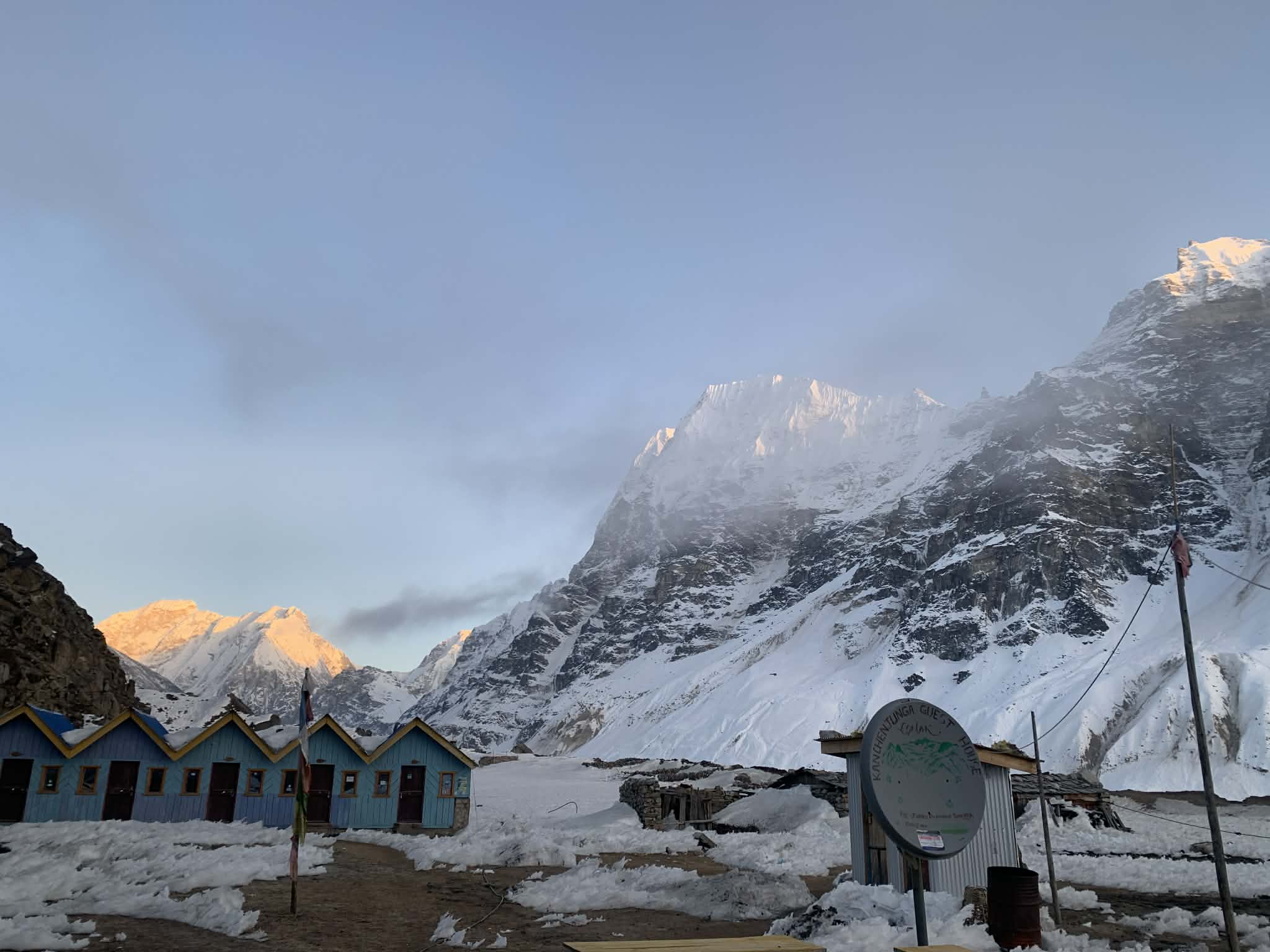
Today’s trek takes about 5–6 hours, covering approximately 9 km. The trail passes through rocky moraines and glacial valleys, offering stunning views of snow-capped peaks. Along the way, there is only one small teahouse, so trekkers should be prepared for minimal facilities. Lonak is the last settlement before reaching Kanchenjunga North Base Camp, making it an important stop for rest and acclimatization. The area is surrounded by majestic mountains, and the trail may also offer sightings of Himalayan blue sheep (bharal) grazing on alpine slopes. The night is spent in a teahouse in Lonak.
Accomodation:
Tea house/Lodge
Meals Included:
Lunch, Dinner, and Breakfast
-
Day 12 : Trek to Kanchenjunga North Base Camp (Pang Pema – 5,143 m) and Return to Lonak
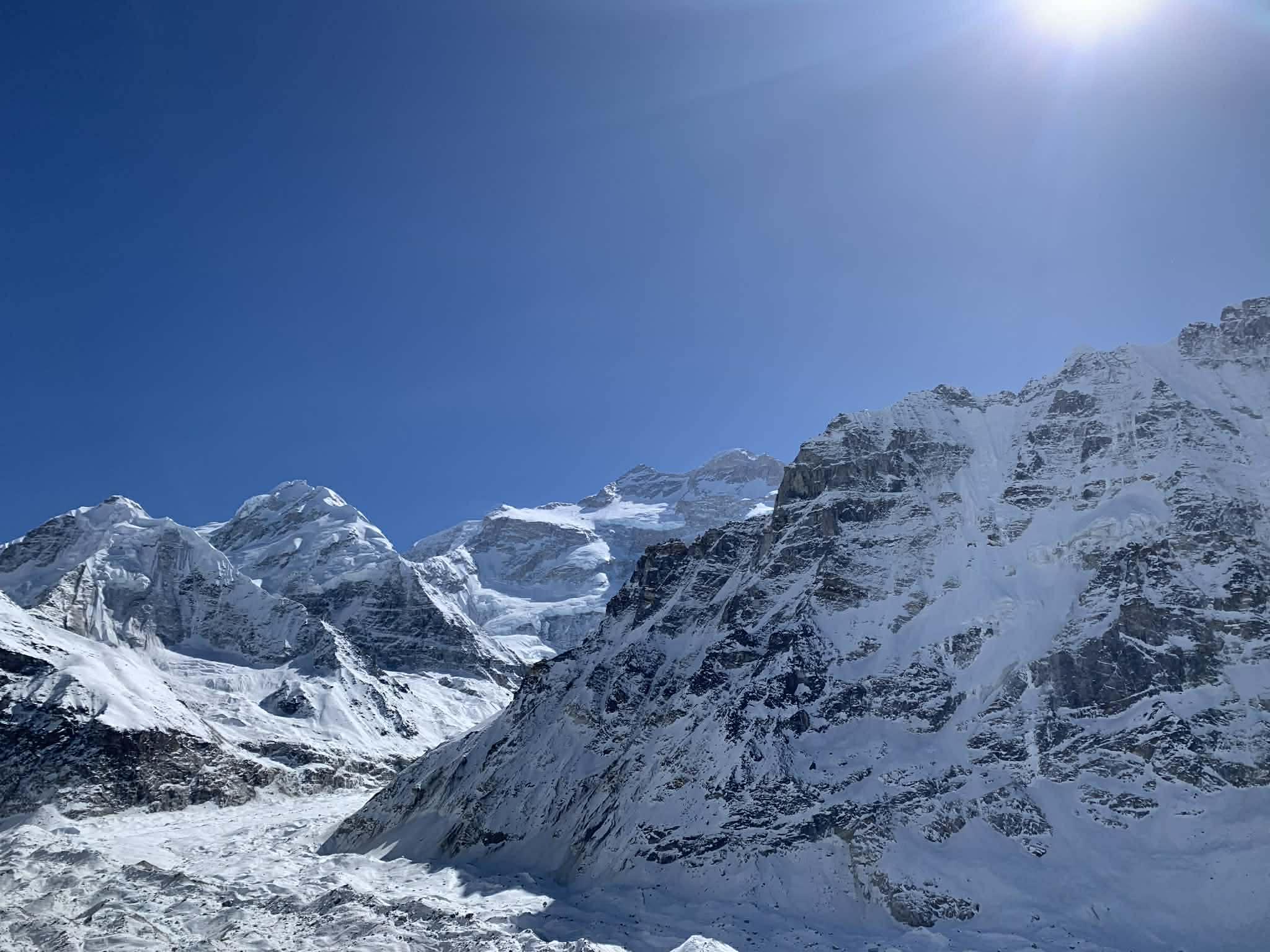
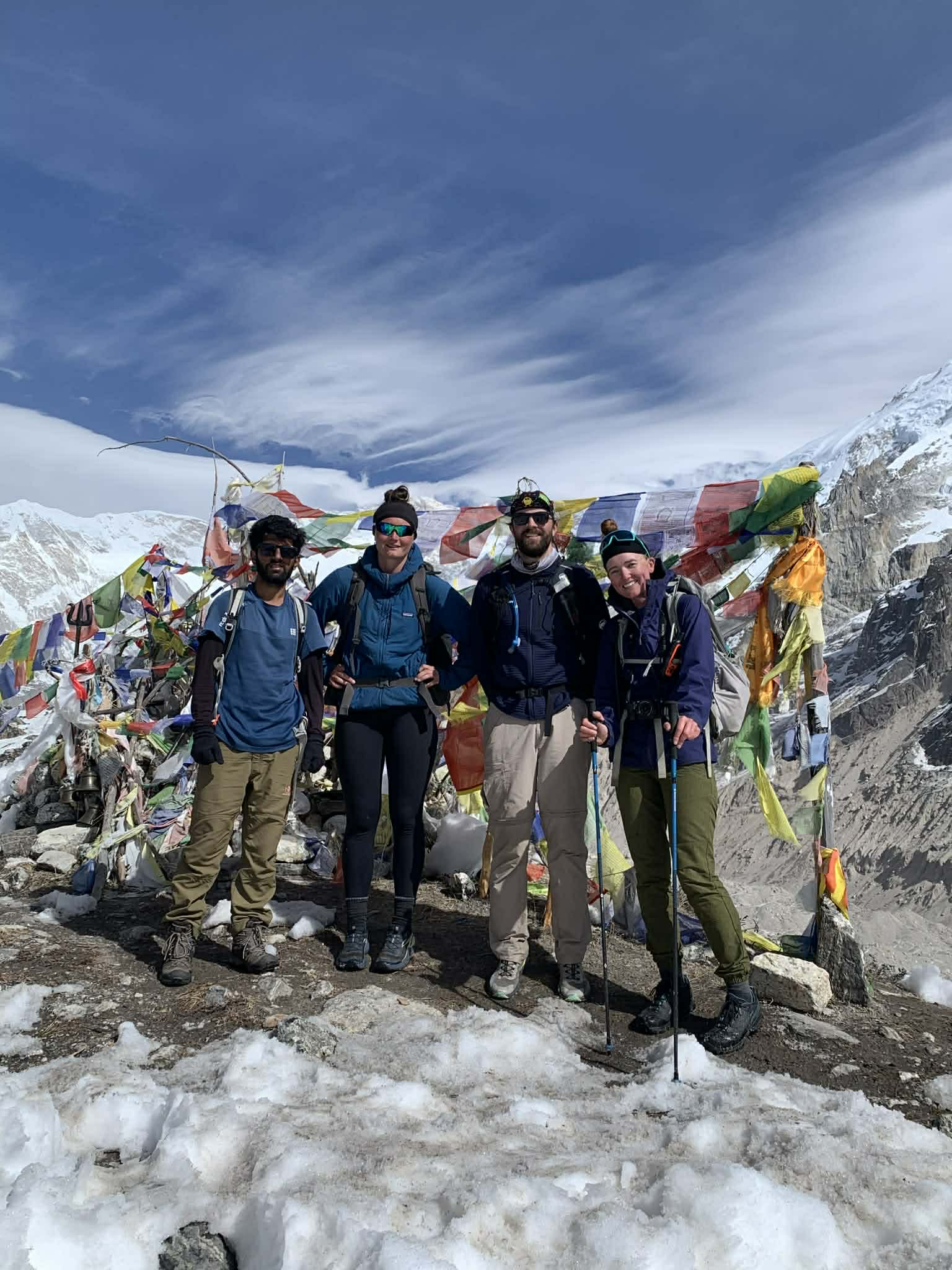
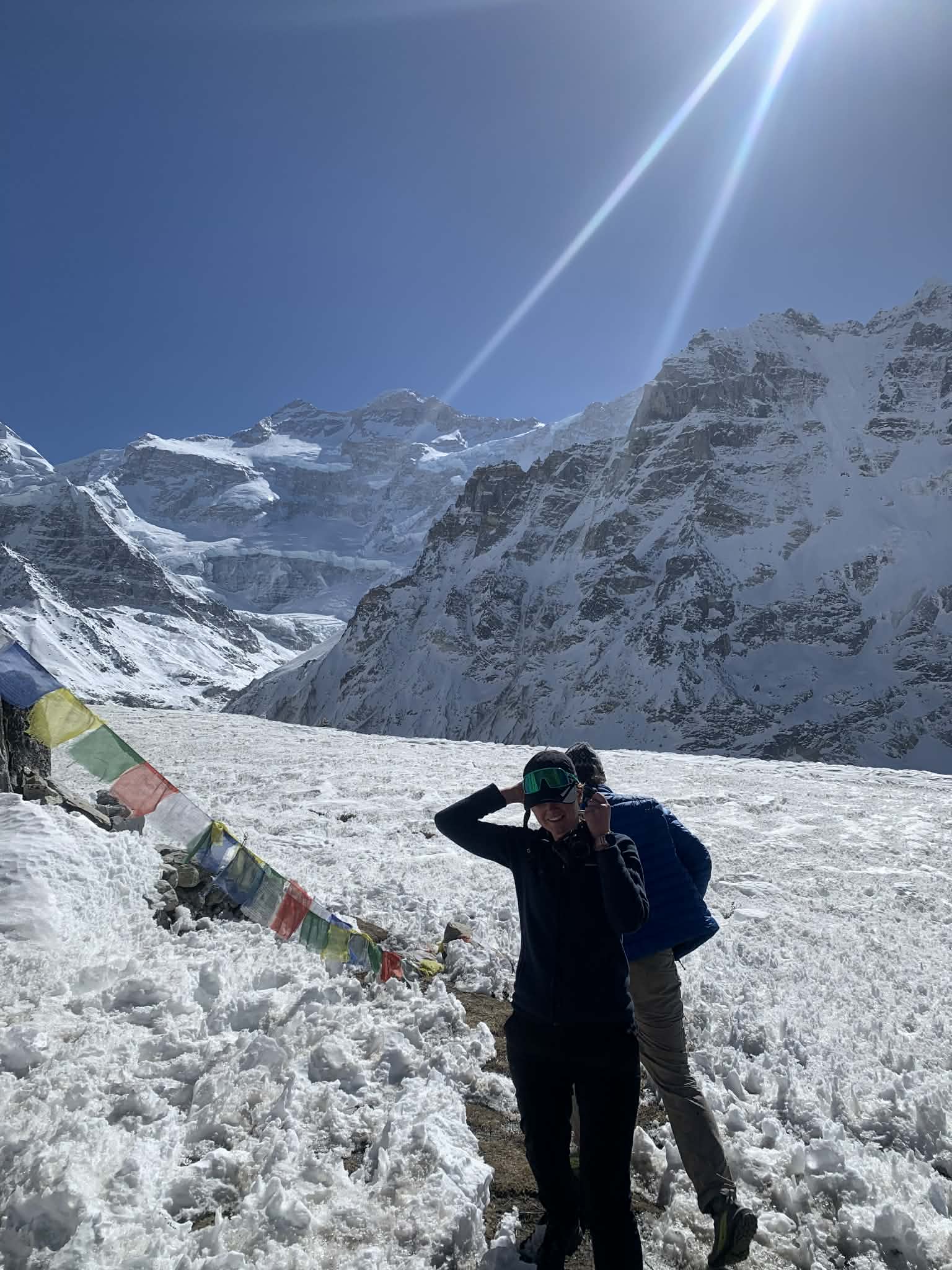
Today is a long but highly rewarding day. The trek takes approximately 6–7 hours, covering around 12 km round trip. On the way to Pang Pema (North Base Camp), you will enjoy spectacular views of Mt. Kanchenjunga, the third highest mountain in the world. Reaching the base camp is a significant achievement, marked by colorful prayer flags fluttering in the wind. There is a small teahouse at the base camp where you can have lunch and spend some time soaking in the majestic surroundings. After enjoying the breathtaking scenery and the accomplishment of reaching the base camp, you trek back down to Lonak for an overnight stay.
Accomodation:
Tea house/Lodge
Meals Included:
Lunch, Dinner, and Breakfast
-
Day 13 : Trek from Lonak to Ghunsa (3,475 m)
Today’s trek retraces the route back to Ghunsa, taking approximately 7–8 hours. The trail gradually descends through glacial valleys, rocky moraines, and alpine meadows. Along the way, you may spot Himalayan blue sheep (bharal) and other wildlife in the higher sections. The trek passes by small streams and offers continued views of surrounding snow-capped peaks, including Jannu (Kumbhakarna). Upon arrival in Ghunsa, trekkers check into a teahouse for an overnight stay.
Accomodation:
Tea house/Lodge
Meals Included:
Lunch, Dinner, and Breakfast
-
Day 14 : Trek from Ghunsa to Selele High Camp (4,290 m)
Today’s trek heads south, gradually climbing through forests and alpine terrain. The walk takes approximately 6–7 hours. Along the way, you can observe the Tanbhrama Danda ridge and follow trails marked by colorful prayer flags guiding the route toward Selele. The trail passes through rhododendron-filled forests, interspersed with pine and birch trees, creating a scenic and serene environment. Upon reaching Selele High Camp, you find a small settlement with two lodges where trekkers stay overnight. The camp also offers stunning views of the surrounding snow-capped peaks, making it a perfect spot to rest and acclimatize before crossing Selele Pass the next day.
Accomodation:
Tea house/Lodge
Meals Included:
Lunch, Dinner, and Breakfast
-
Day 15 : Cross Selele Pass (4,480 m) and Trek to Tseram (3,870 m)
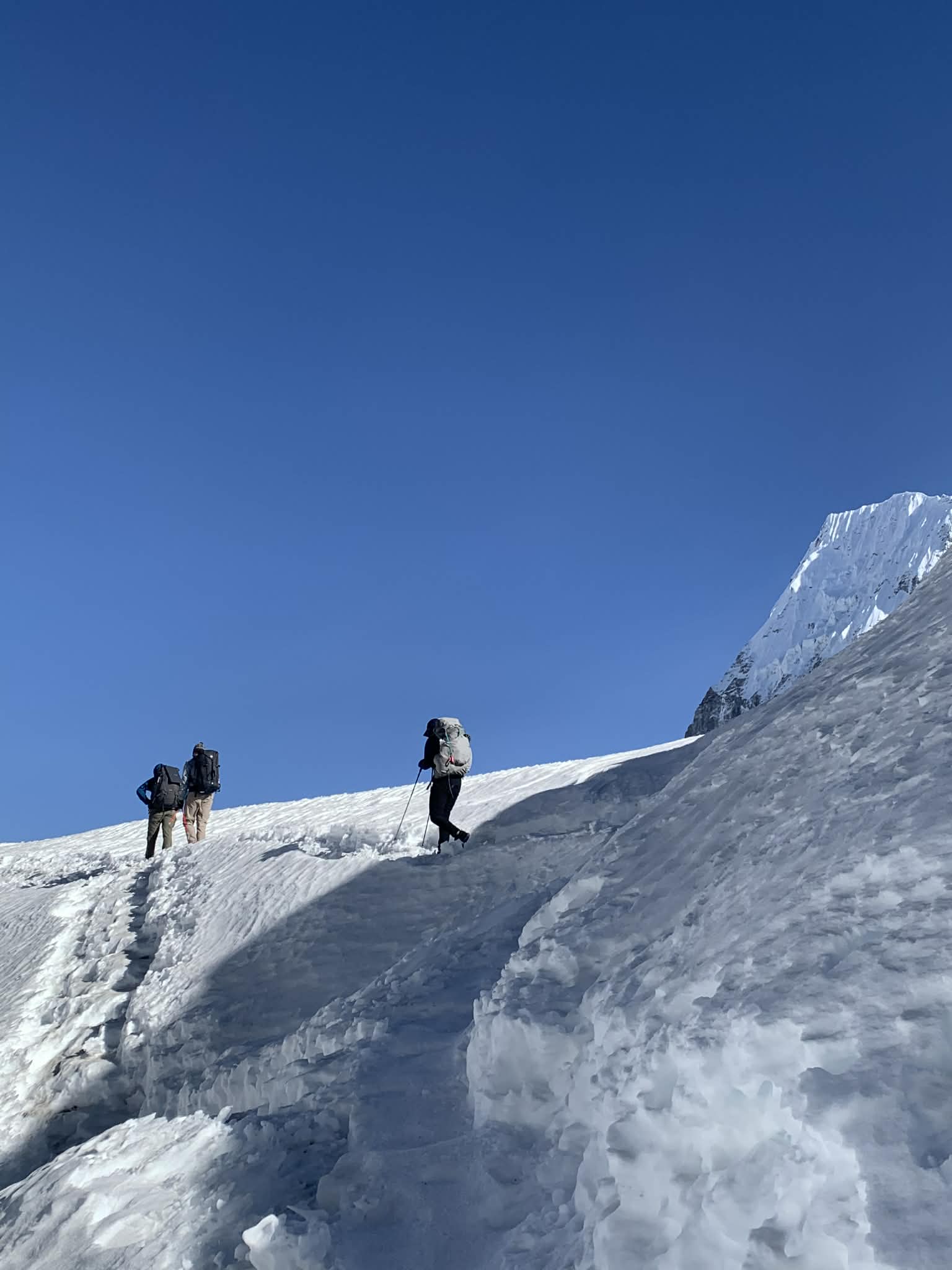
Today is one of the most challenging and rewarding days of the trek. The trek takes approximately 7–8 hours, covering around 11 km. The route crosses Selele Pass, which involves climbing three major hills. On the second hill, there is a small teahouse where trekkers stop for lunch. Along the way, you are rewarded with spectacular views of Mt. Makalu and even Mt. Everest from the trail. After crossing the third hill, the trail descends toward Tseram, offering striking views of Kanchenjunga from the south side. This section passes through alpine meadows and rugged terrain, making it a memorable and scenic part of the trek. Upon arrival, you stay overnight at a local teahouse in Tseram.
Accomodation:
Tea house/Lodge
Meals Included:
Lunch, Dinner, and Breakfast
-
Day 16 : Trek from Tseram to Ramche (4,580 m)
Today’s trek is shorter, taking about 4–5 hours, covering a moderate distance. The trail passes through alpine meadows and small glacial sections, offering dramatic views of the surrounding peaks. Upon reaching Ramche, the last settlement before Kanchenjunga South Base Camp, you feel as if you are resting on the very lap of the mountains, with Kabru Talung towering nearby. The village is small and serene, surrounded by glaciers and snow-capped peaks, making it an ideal place to soak in the high-altitude environment. Overnight is spent at a teahouse, with the stunning mountains creating a breathtaking backdrop for the day.
Accomodation:
Tea house/Lodge
Meals Included:
Lunch, Dinner, and Breakfast
-
Day 17 : Trek to Kanchenjunga South Base Camp (Oktang – 4,700 m) and Return to Tseram
Today’s trek is approximately 6–7 hours, taking you from Ramche to the South Base Camp (Oktang) and back to Tseram. The trail winds along streams and gradually climbs to the summit of the moraine. From here, you are rewarded with spectacular views of the southern face of Kanchenjunga. Further along, you can observe Jannu (Kumbhakarna – 7,711 m) and, in the distance, the Octang Monastery. Continuing onward, you reach Yalung Base Camp, where peaks such as Nyukla Lachung (6,670 m) and other majestic Himalayan summits surround you. After taking in the breathtaking glacier and mountain scenery, you descend back to Tseram for an overnight stay at a teahouse.
Accomodation:
Tea house/Lodge
Meals Included:
Lunch, Dinner, and Breakfast
-
Day 18 : Trek from Tseram to Kyangshera / Lower Villages (2400m)
Today’s trek is a gradual descent through alpine and rhododendron forests, passing small villages and terraced fields along the way. The walk takes approximately 6–7 hours. The trail offers beautiful views of surrounding mountains, streams, and local settlements, giving trekkers a glimpse of the rural Himalayan lifestyle. Upon arrival in Kengsra, a peaceful village at the edge of the high mountains, you stay overnight at a local teahouse.
Accomodation:
Tea house/Lodge
Meals Included:
Lunch, Dinner, and Breakfast
-
Day 19 : Trek to Ranipul (Zero KM) and Drive to Taplejung (1,820 m)
Today marks the final day of trekking. You descend from Kengsara to Ranipul (Zero KM), a trek of approximately 3 hours along forested trails and river valleys. Upon reaching Ranipul/0km, you complete the trek and board a vehicle for the drive back to Taplejung (1,820 m). The drive takes several hours along hilly roads, passing through villages, terraced fields, and scenic landscapes. Overnight stay is at a hotel in Taplejung.
Accomodation:
Lodge
Meals Included:
Lunch, Dinner, and Breakfast
-
Day 20 : Drive from Taplejung to Kanyam (1,700 m)
After breakfast, you begin a scenic drive of approximately 7 hours from Taplejung to Kanyam in Ilam. The route passes through rolling hills, lush tea gardens, and picturesque villages, offering a glimpse of eastern Nepal’s rural landscapes. Kanyam is known for its vibrant tea estates, pleasant climate, and panoramic mountain views. Upon arrival, you check into a hotel and rest for the night.
Accomodation:
Hotel
Meals Included:
Lunch, Dinner, and Breakfast
-
Day 21 : Drive to Bhadrapur Airport and Fly to Kathmandu (1,400 m)
Early in the morning, after breakfast, you visit a local tea farm in Kanyam to see farmers at work and, if you wish, purchase fresh tea directly from the estate. After this visit, you drive for approximately 1.5 hours to Bhadrapur Airport. From there, you take a 45-minute flight back to Kathmandu. Upon arrival, you transfer to your hotel and rest, concluding the journey.
Accomodation:
Hotel
Meals Included:
Lunch, Dinner, and Breakfast
-
Day 22 : Rest Day in Kathmandu (1,400 m)
After returning from the trek, the day is free to relax, shop, or explore Kathmandu at your own pace. You can visit local markets, pick up souvenirs, or simply unwind at the hotel and reflect on your Kanchenjunga adventure.
Accomodation:
Hotel
Meals Included:
Lunch, Dinner, and Breakfast
-
Day 23 : International Departure
Transfer to Tribhuvan International Airport for your flight home, concluding the trek.
Meals Included:
Breakfast
Trip Map

What's Included
- Airport Pickups and drops in a private vehicle.
- Hotel in Kathmandu and with breakfast as per the Itinerary.
- Cultural tour at Kathmandu with Guide in private vehicle.
- All meals (Breakfast, Lunch, and Dinner) during the trek.
- All Ground and Air Transportation during the Trek.
- An experienced, English speaking, and friendly guide and Porter (1 Porter 2 trekkers).
- Salary for the staff including their food, drinks, accommodation, and transportation.
- All necessary paper works, Conservation entry permits, and TIMS card.
- An arrangement for emergency helicopter service which will be paid by your travel insurance.
- Sleeping bag, down jacket and trekking map, if necessary,( to be returned after the trek)
- All government taxes, vat, and local taxes.
- Nepal entry visa fee. (You may easily issue the visa upon your arrival at Tribhuwan international airport (Kathmandu). You will require 2 passport size photos & 25 USD.
- International airfare.
- Your travel insurance (compulsory).
- Meals in Kathmandu
- Entry fees for cultural tours.
- Personal expenses (alcoholic, non-alcoholic drinks bar bills, battery charge, extra porter, boiled water shower, etc.).
- Tips for guide, porter and driver
Equipment List
List of Equipments required for Kanchenjunga Circuit Trek:
Head
- One Warm winter hat/beanie
- One Sun hat
- 1 Headband/buff
- 1 Sunglasses with UV protection
- One Headlamp/ Torch with extra batteries
Upper Body
- Two pairs of Fleece sweaters- one light and one heavier
- Two pairs of quick-drying long-sleeved base layer shirts
- Three pairs of Short sleeve trekking shirts
- One pair of Wind/rainproof Jacket v 1 Down Jacket
Lower Body
- One pair of trekking shorts
- A pair of trekking trousers
- One pair of lightweight thermal bottoms (seasonal)
- Two pairs of trekking pants with Ziff off bottoms
- One pair of fleece or woolen trousers
- One pair of waterproof pants, breathable fabric
Hands
- One pair of lightweight warm gloves
- A pair of poly-liner glove
Feet
- One pair of trekking boots
- A pair of sandals/ trainers (for wearing around the lodges)
- One pair of down booties (great for keeping feet warm)
- Two pair of thin lightweight inner socks
- Two pair of warm woolen or poly socks
- Gaiters (only in winter)
Other
- One Sleeping Bag
- 12 1 Sleeping bag liner (optional)
- 1 pair of trekking poles
- Water purification tablets/Steripen/Drops
- 1 quick drying towel
FAQs
-
What are the visa requirements?
-
What are the physical requirements for Kanchenjunga Circuit Trek?
-
How old do I need to be?
-
What is included?
-
What is the accommodation like?
-
Which meals are included?
-
What currency should I take?
-
Is there any bank or ATM facility during Kanchenjunga Circuit Trek?
-
What kind of problems can arise at a higher altitude during Kanchenjunga Circuit Trek?
-
Do I need insurance before the Kanchenjunga Circuit Trek?
-
What should I pack?
-
What is the best time of year for Kanchenjunga Circuit Trek?
Gallery


*All Inclusive Price*
$2200 USD
- Prompt Online Booking
- Well Arranged Itenary
- Group Discount Available
- Privacy Protected

Any Question? Feel free to call our travel experts.


+977 9851203504