
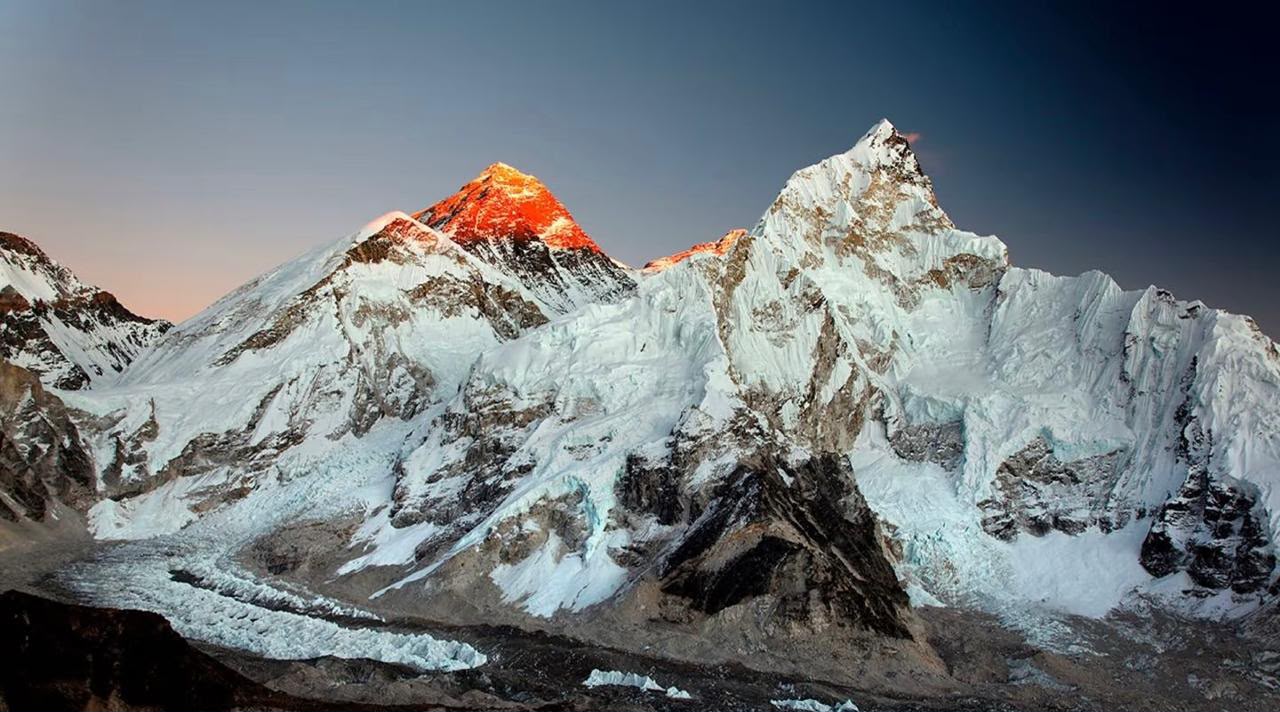
Everest Base Camp Trek 2026/2027 – Complete Guide, Cost, Itinerary & Tips | Danphe Adventure Treks
28/07/2026
Standing at the foot of Mount Everest is a dream that inspires people from every corner of the world. For some, it’s about ticking off a bucket-list adventure. For others, it’s a personal challenge, a chance to disconnect from everyday life, or an opportunity to experience the Himalayas up close. Whatever brings you to Nepal, the Everest Base Camp Trek offers far more than reaching a famous destination. It’s a journey through breathtaking mountain landscapes, welcoming Sherpa villages, ancient monasteries, and a culture that has been shaped by the world’s highest peaks.
Every step along the trail tells a different story. One day you’re walking through forests filled with pine and rhododendron trees, crossing suspension bridges decorated with colourful prayer flags. A few days later, the scenery changes dramatically as you climb above the tree line into a world of glaciers, rocky valleys, and snow-covered mountains.
The destination may be Everest Base Camp, but most trekkers discover that the journey itself becomes the highlight. Watching the sunrise from Kala Patthar, sharing stories with fellow trekkers over a warm meal in a teahouse, spinning prayer wheels as you pass through quiet villages, and receiving a friendly smile from local Sherpa families are the moments that stay with you long after you’ve returned home.
One of the biggest misconceptions about the Everest Base Camp Trek is that it’s only for elite athletes or experienced mountaineers. In reality, thousands of ordinary people complete this trek every year. You don’t need climbing experience or technical skills. With a reasonable level of fitness, proper preparation, and enough time to acclimatise, it’s an achievable adventure for many people.
At Danphe Adventure Treks & Expedition Pvt. Ltd., we’ve helped travellers from around the world experience Nepal’s mountains safely and confidently. We understand that planning a trek can feel overwhelming, especially if it’s your first time visiting the Himalayas. That’s why we’ve created this guide—to answer your questions honestly and help you prepare for one of the most rewarding journeys you’ll ever take.
Whether you’re travelling solo, with friends, as a couple, or as part of a family adventure, this guide will walk you through everything you need to know before setting foot on the trail.
Everest Base Camp Trek at a Glance
Before diving into the details, here’s a quick overview of what to expect.
Trek Detail Information
Destination Everest Base Camp, Khumbu Region, Nepal
Maximum Altitude 5,545 m (18,192 ft) at Kala Patthar
Everest Base Camp Altitude 5,364 m (17,598 ft)
Duration 12–14 days (depending on itinerary)
Walking Hours 5–8 hours per day
Difficulty Moderate to Challenging
Accommodation Family-run mountain teahouses
Best Seasons March–May and late September–November
Highest Sleeping Altitude Gorak Shep (5,164 m)
Starting Point Lukla
Ending Point Lukla
Why the Everest Base Camp Trek Is More Than Just a Trek
People often ask what makes Everest Base Camp different from other trekking destinations.
The simple answer is that no other trek combines world-famous mountains, rich culture, centuries-old traditions, and a sense of personal achievement quite like this one.
You’re not simply walking towards Mount Everest. You’re travelling through the heart of the Khumbu region, where the mountains shape everyday life. Along the way, you’ll pass stone-built villages, visit Buddhist monasteries that have stood for generations, and meet people whose lives are deeply connected to the Himalayas.
Unlike many popular hiking destinations around the world, the Everest region has very few roads. Supplies still arrive by foot, yak, or helicopter. That means life here moves at a slower pace, giving visitors a chance to experience a way of living that has remained remarkably unchanged for decades.
Many trekkers arrive expecting dramatic mountain scenery, and they certainly find it. But what often surprises them is how memorable the people are. A warm cup of tea offered by a lodge owner after a long day, children greeting you with cheerful smiles as you pass through a village, or conversations with your guide about local customs often become the moments people remember most.
This combination of nature, culture, and human connection is what makes the Everest Base Camp Trek so special.
Why Choose the Everest Base Camp Trek?
There are many incredible trekking routes in Nepal, so why do so many travellers choose Everest Base Camp?
Stand Beneath the World’s Highest Mountain
Mount Everest is the highest peak on Earth at 8,848.86 metres. Standing at its base is a moment that few people ever experience, making the journey a lifelong dream for many adventurers.
Although the summit remains the goal of elite climbers, reaching Base Camp allows trekkers to witness the scale and beauty of Everest without technical climbing.
Experience Sherpa Culture
The Everest region is home to the Sherpa people, whose reputation for mountaineering is recognised around the world.
Beyond their climbing achievements, the Sherpa community is known for its hospitality, resilience, and strong Buddhist traditions.
As you travel through villages such as Namche Bazaar, Khumjung, Pangboche, and Tengboche, you’ll gain a deeper appreciation for the culture that has flourished in these mountains for generations.
Walk Through a UNESCO World Heritage Site
Much of the trek passes through Sagarmatha National Park, a protected area recognised for both its natural beauty and ecological importance.
The park is home to diverse wildlife, ancient forests, glaciers, and some of the most spectacular mountain scenery anywhere on Earth.
Why the Everest Base Camp Trek Is a Meaningful Challenge
The Everest Base Camp Trek isn’t a race. There are no medals waiting at the finish line. Instead, the reward comes from discovering what you’re capable of achieving. Every uphill climb, every early morning start, and every step at high altitude builds confidence and resilience. Many people return home saying the experience changed the way they think about challenges, both on and off the trail.
Enjoy Incredible Himalayan Views Every Day
The scenery constantly changes as you climb higher.
During the trek, you’ll enjoy unforgettable views of mountains including:
* Mount Everest (8,848.86 m)
* Lhotse (8,516 m)
* Nuptse (7,861 m)
* Ama Dablam (6,812 m)
* Thamserku (6,608 m)
* Kangtega (6,782 m)
* Pumori (7,161 m)
Each day reveals a new perspective, making every stage of the journey feel rewarding.
Is the Everest Base Camp Trek Right for You?
One of the first questions many travellers ask is whether they’re fit enough.
The truth is that the Everest Base Camp Trek is designed for ordinary people with determination, not professional athletes.
You don’t need mountaineering experience or technical climbing skills. The trail is well established and followed by thousands of trekkers each year.
That said, you should be prepared for several consecutive days of walking over uneven terrain. Most days involve between five and eight hours on the trail, with some long uphill sections.
Altitude also plays a significant role. As you climb higher, the thinner air means you’ll naturally walk at a slower pace than you would at sea level.
If you can comfortably enjoy long walks, are willing to prepare before your trip, and approach the trek with patience rather than speed, there’s every reason to believe you can successfully reach Everest Base Camp.
In fact, some of the happiest people we meet on the trail are first-time trekkers who simply took their time and enjoyed the journey.
Everest Base Camp Trek Highlights
Every trek has its memorable moments, but the Everest Base Camp Trek offers experiences that stay with you long after you’ve returned home. From the excitement of landing at Lukla to watching the sun rise over Mount Everest, each day brings something new.
Here are some of the highlights you can look forward to during your journey.
Fly to Lukla – The Gateway to Everest
For many trekkers, the adventure begins the moment they board the flight to Lukla.
The flight itself lasts around 30 to 35 minutes, but it’s one of the most scenic journeys in Nepal. As the aircraft leaves Kathmandu behind, the landscape quickly changes from green hills to dramatic Himalayan peaks. On a clear morning, you’ll enjoy breathtaking views before landing at Tenzing-Hillary Airport, one of the world’s most famous mountain airports.
Although Lukla is often known for its short runway, local pilots are highly trained and experienced in mountain flying. Weather conditions play an important role, so occasional delays are simply part of travelling in the Himalayas.
Rather than seeing a delay as a frustration, many experienced trekkers see it as a reminder that nature always has the final say in the mountains.
Walk Through Traditional Sherpa Villages
One of the most rewarding parts of the Everest Base Camp Trek is experiencing life in the Khumbu region.
The trail passes through villages where people have lived in the Himalayas for generations. Stone houses, colourful prayer flags, carved mani stones, spinning prayer wheels, and small Buddhist stupas become part of your daily surroundings.
Each village has its own unique character.
In Phakding, life moves at a gentle pace beside the Dudh Koshi River. Namche Bazaar is lively and full of energy, while Tengboche feels peaceful thanks to its famous monastery. Higher up, villages like Dingboche and Lobuche become smaller and quieter as the landscape grows more rugged.
These villages aren’t tourist attractions built for visitors—they are real communities where local families welcome trekkers into their teahouses and share a glimpse of mountain life.
Experience the Warm Hospitality of the Sherpa People
The Sherpa people are known around the world for their strength and mountaineering skills, but what many visitors remember most is their kindness.
Whether you’re enjoying a cup of hot tea after a long day’s walk or chatting with lodge owners over dinner, you’ll quickly notice how welcoming people are.
Life in the mountains isn’t always easy. Supplies often arrive on the backs of porters or yaks, and winters can be long and harsh. Despite these challenges, visitors are welcomed with genuine warmth and respect.
Taking the time to learn a few simple Nepali greetings or showing interest in local traditions often leads to meaningful conversations and memorable experiences.
Cross Iconic Suspension Bridges
Suspension bridges are one of the most recognisable features of the Everest trail.
Some stretch high above deep river valleys, decorated with colourful prayer flags fluttering in the wind. Walking across them can feel exciting at first, especially if it’s your first time, but they are a normal part of daily life in the region.
The Hillary Suspension Bridge, located before the climb to Namche Bazaar, is perhaps the most famous of them all. Looking down at the rushing Dudh Koshi River while surrounded by towering cliffs is an experience you’ll never forget.
As your confidence grows, crossing these bridges soon becomes one of the most enjoyable parts of each day’s walk.
Explore Namche Bazaar
At an altitude of 3,440 metres, Namche Bazaar is often called the heart of the Khumbu region.
Built into a natural hillside amphitheatre, it’s much larger than many first-time visitors expect. Along its narrow streets you’ll find cosy cafés, bakeries, trekking equipment shops, banks, pharmacies, and small museums.
Most itineraries include two nights here to allow your body time to acclimatise before heading to higher elevations.
Rather than spending the day resting indoors, many trekkers hike to nearby viewpoints such as the Everest View Hotel or Khumjung Village. These short walks not only help with acclimatisation but also reward you with your first truly spectacular views of Mount Everest.
Namche is also a wonderful place to slow down, enjoy a freshly baked apple pie or cup of coffee, and simply watch mountain life unfold around you.
Visit Tengboche Monastery
Few places along the trail feel as peaceful as Tengboche.
Surrounded by snow-capped peaks, Tengboche Monastery is the largest Buddhist monastery in the Everest region and an important spiritual centre for the local community.
Many trekkers choose to arrive early enough to attend the afternoon prayer ceremony. The sound of monks chanting, the scent of incense, and the colourful prayer flags fluttering outside create an atmosphere that’s difficult to put into words.
Whether you’re religious or not, spending a quiet moment here offers a deeper appreciation of the culture and traditions that shape life in the Himalayas.
Walk Through Sagarmatha National Park
Much of the Everest Base Camp Trek takes place inside Sagarmatha National Park, a UNESCO World Heritage Site established to protect the region’s unique environment.
In the lower elevations, forests of pine, fir, birch, and rhododendron provide a habitat for many species of wildlife.
If you’re fortunate, you may spot Himalayan tahr grazing on steep hillsides, colourful Danphe (the Himalayan monal and Nepal’s national bird), musk deer moving quietly through the forest, or Himalayan griffon vultures soaring high above the valleys.
As you climb higher, the landscape gradually changes. Trees disappear, glaciers become more prominent, and the mountains seem to grow larger with every step.
The changing scenery is one of the reasons the trek never feels repetitive.
Reach Everest Base Camp
After days of steady walking and careful acclimatisation, you’ll finally reach Everest Base Camp at 5,364 metres.
Unlike many mountain summits, Base Camp isn’t about standing on a peak. Instead, it’s about arriving at one of the most iconic places in mountaineering.
During the spring climbing season, colourful expedition tents cover the rocky glacier as climbers prepare for their attempt on Mount Everest. At other times of the year, the area is much quieter, allowing you to appreciate the scale of the Khumbu Icefall and the surrounding mountains.
Most trekkers spend time taking photographs, celebrating with their guide and fellow trekkers, and simply soaking in the atmosphere before returning to Gorak Shep for the night.
It’s a proud moment that reflects days of determination rather than speed.
Watch Sunrise from Kala Patthar
If you ask experienced trekkers about their favourite moment, many will tell you it wasn’t Everest Base Camp—it was Kala Patthar.
At 5,545 metres, Kala Patthar offers the closest and clearest panoramic view of Mount Everest available to trekkers.
The climb usually begins before sunrise while it’s still dark. Although it’s one of the most physically demanding parts of the trek, reaching the viewpoint as the first golden light touches Everest is a truly unforgettable experience.
The surrounding peaks, including Nuptse, Lhotse, Pumori, and Ama Dablam, glow in the early morning light, creating one of the most spectacular mountain panoramas anywhere in the world.
Many trekkers say this quiet sunrise becomes the defining memory of their entire Himalayan adventure.
More Than a Destination
One of the biggest surprises for many visitors is that the Everest Base Camp Trek isn’t only about reaching Base Camp.
It’s about the conversations you have with your guide while walking through quiet forests.
It’s the laughter shared with other trekkers around the dining table after a long day.
It’s watching a line of yaks carrying supplies along the trail, hearing prayer flags flutter in the wind, and waking up each morning to a different view of the Himalayas.
These moments can’t be measured on a map or captured completely in a photograph.
They’re simply part of what makes the Everest Base Camp Trek such a meaningful journey.
Everest Base Camp Trek Itinerary (12 Days)
The classic Everest Base Camp Trek takes around 12 days from Lukla and back, although some itineraries are slightly longer or shorter.
Our itinerary is designed with proper acclimatisation in mind, giving your body enough time to adjust to the altitude while allowing you to enjoy the journey at a comfortable pace. Rushing to Base Camp may save a day or two, but it also increases the risk of altitude sickness and leaves little time to appreciate the incredible landscapes and Sherpa culture along the way.
Below is a day-by-day overview of what you can expect.
Day 1: Fly from Kathmandu to Lukla (2,860 m) and Trek to Phakding (2,610 m)
Flight: 30–35 minutes
Walking Time: 3–4 hours
Your adventure begins early in the morning with one of Nepal’s most memorable flights.
As the aircraft climbs above Kathmandu Valley, the scenery gradually transforms into rolling green hills before the snow-covered Himalayas come into view. On a clear day, the flight offers spectacular mountain views and an exciting introduction to the Everest region.
Landing at Lukla is often an unforgettable experience. Although its runway is short, flights are operated by highly experienced mountain pilots who fly this route every day during the trekking seasons.
After meeting your guide and porter, there’s time for a final equipment check before setting off on foot.
The trail begins with a gentle descent through small Sherpa villages, crossing suspension bridges and following the Dudh Koshi River. Since you’re gradually losing altitude, the first day’s walk is relatively easy and gives your body a chance to warm up before the more demanding days ahead.
You’ll spend your first night in the peaceful village of Phakding.
What you’ll see today
* First views of the Khumbu landscape
* Traditional stone-built villages
* Prayer wheels and mani walls
* Suspension bridges over the Dudh Koshi River
* Local teahouses and small farms
Local guide tip
Don’t be tempted to walk too quickly just because the trail feels easy. A slow and steady pace from the very beginning helps conserve energy for the days ahead.
Day 2: Trek from Phakding to Namche Bazaar (3,440 m)
Walking Time: 6–7 hours
Today’s trek introduces you to one of the most rewarding sections of the journey.
After breakfast, you’ll continue following the Dudh Koshi River, crossing several suspension bridges decorated with colourful prayer flags. The trail passes through small settlements where local people continue their daily routines much as they have for generations.
Before reaching Namche Bazaar, you’ll enter Sagarmatha National Park, where your trekking permits are checked.
One of today’s highlights is crossing the famous Hillary Suspension Bridge, suspended high above the river. For many trekkers, this becomes one of the most photographed spots on the trail.
After crossing the bridge, the trail begins its longest uphill climb of the day.
Although the ascent is challenging, taking regular breaks and maintaining a comfortable pace makes it much more manageable.
On clear afternoons, many trekkers catch their first distant glimpse of Mount Everest during this climb—a rewarding sight after the effort.
By late afternoon, you’ll arrive in Namche Bazaar, the bustling heart of the Khumbu region.
Highlights
* Enter Sagarmatha National Park
* Cross the famous Hillary Suspension Bridge
* First possible view of Mount Everest
* Arrive at Namche Bazaar
Local guide tip
The climb to Namche often feels harder than expected because of the altitude. Walk slowly, drink plenty of water, and remember that everyone naturally moves at a slower pace here.
Day 3: Acclimatisation Day in Namche Bazaar
One of the most common mistakes trekkers make is thinking acclimatisation means staying in bed all day.
In reality, your body adapts better when you follow the principle of “climb high, sleep low.”
Today you’ll take a short hike to a higher elevation before returning to Namche for the night.
A popular option is hiking to the Everest View Hotel, one of the highest hotels in the world. On a clear day, the panoramic views of Everest, Ama Dablam, Lhotse, and Thamserku are simply breathtaking.
Some trekkers continue to Khumjung Village, where you’ll find the historic Hillary School and Khumjung Monastery, which is known for displaying what locals believe to be a Yeti scalp.
After returning to Namche, you’ll have the afternoon free to explore.
Many visitors enjoy relaxing in one of the cafés, browsing trekking gear shops, or visiting the Sherpa Culture Museum.
Why this day matters
Acclimatisation isn’t simply built into the itinerary to make the trek longer.
It’s one of the most important investments you can make in your safety and your chances of successfully reaching Everest Base Camp.
Day 4: Trek from Namche Bazaar to Tengboche (3,860 m)
Walking Time: 5–6 hours
Today’s walk is often considered one of the most beautiful days of the entire trek.
The morning begins with a relatively gentle trail that follows the mountainside, offering uninterrupted views of Everest, Lhotse, Ama Dablam, and several other Himalayan peaks.
The scenery changes constantly, making it difficult to resist stopping for photographs.
Eventually, the trail descends to the Dudh Koshi River before climbing steadily through forests of pine, juniper, and rhododendron towards Tengboche.
As you approach the village, the magnificent Tengboche Monastery comes into view, framed by the towering peaks behind it.
If timing allows, attending the afternoon prayer ceremony offers a peaceful glimpse into local Buddhist traditions.
Highlights
* Panoramic Himalayan mountain views
* Tengboche Monastery
* Beautiful forest trails
* Opportunity to observe Buddhist prayer ceremonies
Local guide tip
Keep your camera within easy reach today. Many of the trek’s most iconic photographs are taken between Namche Bazaar and Tengboche.
Day 5: Trek from Tengboche to Dingboche (4,410 m)
Walking Time: 5–6 hours
After leaving Tengboche, you’ll descend through a peaceful forest before crossing the Imja Khola River.
From here, the landscape gradually changes.
The forests become thinner, the valleys wider, and the mountains feel even closer.
You’ll pass through the traditional Sherpa village of Pangboche, one of the oldest settlements in the Khumbu region.
Many trekkers choose to visit Pangboche Monastery, believed to be one of the oldest monasteries in eastern Nepal.
As you continue climbing towards Dingboche, stone walls begin to surround small potato fields, protecting crops from the cold mountain winds.
The air feels noticeably thinner now, reminding you that you’re entering high-altitude terrain.
Highlights
* Pangboche Village
* Traditional Sherpa farming
* Expanding mountain views
* Entering the alpine landscape
Local guide tip
From this point onwards, staying hydrated becomes even more important. Even if you don’t feel thirsty, try to drink water regularly throughout the day.
Day 6: Acclimatisation Day in Dingboche (4,410 m)
Optional Hike: Nagarjun Hill (5,100 m) or Chhukung Valley
Walking Time: 3–5 hours
By now, you’ve already spent several days above 3,000 metres, and today is another important acclimatisation day.
Although it may be tempting to relax at the teahouse all day, a short hike to a higher elevation helps your body adjust more effectively to the altitude. Your guide will usually recommend hiking to Nagarjun Hill, a viewpoint overlooking the Imja Valley.
The climb is steady and can feel surprisingly demanding because of the thinner air, but every step is rewarded with breathtaking views.
From the top, you’ll be surrounded by some of Nepal’s highest peaks, including Makalu (8,485 m), the world’s fifth-highest mountain, along with Lhotse, Ama Dablam, Island Peak, and the impressive Amphu Lapcha.
After spending some time enjoying the scenery, you’ll descend to Dingboche for lunch and a well-earned rest.
The afternoon is usually relaxed. Some trekkers enjoy reading, playing cards with fellow hikers, or simply sitting outside the teahouse with a hot drink while watching clouds drift across the mountains.
Why This Day Matters
Many people think reaching Everest Base Camp depends on fitness alone. In reality, successful trekkers are often those who respect the altitude.
Taking this extra day gives your body valuable time to adapt and greatly improves your chances of completing the trek comfortably.
Local Guide Tip
You may notice your appetite decreases as you gain altitude, but it’s important to continue eating regular meals. Your body needs plenty of energy, even if you don’t feel particularly hungry.
Day 7: Trek from Dingboche to Lobuche (4,910 m)
Walking Time: 5–6 hours
Today’s walk takes you deeper into the high Himalayas.
Leaving Dingboche behind, you’ll gradually climb across open alpine terrain with spectacular mountain views in every direction.
The trail passes through Thukla (Dhukla), where many trekkers stop for lunch before beginning a short but steep climb to the Everest Memorial.
This is one of the most emotional places on the entire trek.
Scattered across the hillside are memorials dedicated to climbers and Sherpas who lost their lives on Everest. Rather than being a sad place, it’s a peaceful reminder of the courage, determination, and respect these mountains deserve.
Most trekkers naturally slow down here, taking a few quiet moments to reflect before continuing.
Beyond the memorials, the trail becomes gentler as you follow the edge of the Khumbu Glacier towards Lobuche.
By now, the landscape feels completely different from where you started just a week earlier. Trees have disappeared, replaced by rocky terrain, glaciers, and towering peaks.
Highlights
* Thukla Pass
* Everest Memorial
* Khumbu Glacier
* Stunning views of Nuptse and Pumori
Local Guide Tip
Even simple tasks, like climbing stairs or carrying your daypack, can feel harder at this altitude. Walk slowly and avoid comparing your pace with others.
Day 8: Trek to Gorak Shep (5,164 m), then Everest Base Camp (5,364 m)
Walking Time: 7–8 hours
Today is the day you’ve been working towards.
After breakfast, you’ll leave Lobuche and follow a rocky trail alongside the Khumbu Glacier. The path is uneven in places, so careful footing is important.
After around three hours, you’ll arrive at Gorak Shep, the last settlement before Everest Base Camp.
You’ll check into your teahouse, enjoy lunch, and leave your larger bag before continuing towards Base Camp with just your daypack.
The final section follows the edge of the Khumbu Glacier.
As you get closer, colourful prayer flags begin to appear, marking one of the world’s most famous trekking destinations.
Standing at Everest Base Camp is a special moment.
Although the summit of Everest isn’t visible from here because it’s hidden behind surrounding peaks, you’ll be standing beside the dramatic Khumbu Icefall, where Everest expeditions begin their climb.
During spring, the glacier is covered with colourful expedition tents as climbers prepare for their summit attempts.
Outside the climbing season, Base Camp is much quieter, allowing you to appreciate the raw beauty of the landscape.
After celebrating with your guide and taking plenty of photographs, you’ll return to Gorak Shep for the night.
Highlights
* Walk beside the Khumbu Glacier
* Reach Everest Base Camp
* View the Khumbu Icefall
* Celebrate your achievement
Local Guide Tip
Enjoy the moment rather than rushing to take photographs. Many trekkers later say their favourite memory wasn’t the pictures they took but simply standing quietly and taking in the incredible surroundings.
Day 9: Sunrise at Kala Patthar (5,545 m) and Trek to Pheriche (4,240 m)
Walking Time: 7–8 hours
Today begins before sunrise.
Wrapped in warm layers and carrying a headlamp, you’ll leave Gorak Shep while the stars still shine above the Himalayas.
The climb to Kala Patthar is short but steep, and the altitude makes every step feel slower.
As the eastern sky begins to brighten, you’ll reach one of the most famous viewpoints in Nepal.
The first rays of sunlight gradually illuminate Everest’s summit while neighbouring peaks glow shades of gold and orange.
It’s difficult to describe the feeling.
There’s no noise except the wind and the quiet excitement shared by fellow trekkers who have made the journey alongside you.
Many people say this sunrise becomes the most unforgettable moment of the entire trek.
After descending to Gorak Shep for breakfast, you’ll begin your return journey, retracing your steps to Pheriche.
The descent feels noticeably easier as the oxygen level increases.
Highlights
* Sunrise from Kala Patthar
* Best panoramic view of Mount Everest
* Return below 4,500 metres
* Easier breathing as you descend
Local Guide Tip
Even though you’re walking downhill, take care on loose rocks and uneven trails. Many minor injuries happen during the descent when people become less cautious.
Day 10: Trek from Pheriche to Namche Bazaar
Walking Time: 6–7 hours
Today’s walk feels very different from the climb up.
With each hour, you’ll notice warmer temperatures, greener landscapes, and fuller forests returning.
Crossing familiar suspension bridges and passing through villages you’ve already visited often brings a sense of accomplishment.
By the time you arrive back in Namche Bazaar, many trekkers choose to celebrate with freshly baked cake, coffee, or a hot shower—simple comforts that feel especially rewarding after several days at high altitude.
The atmosphere is relaxed, and it’s a wonderful evening to reflect on everything you’ve experienced over the past week.
Day 11: Trek from Namche Bazaar to Lukla
Walking Time: 6–7 hours
Your final day on the trail follows the Dudh Koshi River back towards Lukla.
Although the walking is easier than earlier in the trek, there are still a few uphill sections before reaching your final destination.
As you pass through villages one last time, you’ll probably recognise familiar faces from local teahouses where you stayed earlier in the journey.
Arriving back in Lukla often brings mixed emotions.
There’s pride in what you’ve achieved, but also a little sadness that the adventure is coming to an end.
In the evening, many trekking groups gather with their guides and porters to share a final meal together and celebrate the successful completion of the trek.
Local Guide Tip
If you enjoyed your guide and porter’s support, this is a good time to thank them. A sincere conversation often means just as much as a tip.
Day 12: Fly Back to Kathmandu
Weather permitting, you’ll board a morning flight back to Kathmandu.
As the mountains gradually disappear beneath the clouds, you’ll have time to reflect on the journey you’ve completed.
For many people, reaching Everest Base Camp is the fulfilment of a lifelong dream.
For others, it’s just the beginning of a lifelong love for the Himalayas.
Don’t be surprised if, before you’ve even left Nepal, you’re already thinking about your next trek.
A Few Honest Thoughts About the Itinerary
One question we’re often asked is, “Can I do the Everest Base Camp Trek in fewer days?”
Technically, yes. Some itineraries are shorter.
However, we generally don’t recommend rushing a high-altitude trek.
Adding proper acclimatisation days gives your body time to adjust naturally, reduces the risk of altitude sickness, and allows you to enjoy the experience instead of constantly watching the clock.
The Everest Base Camp Trek isn’t about how quickly you can reach Base Camp.
It’s about appreciating every step of the journey—the changing landscapes, the Sherpa culture, the friendships made along the trail, and the quiet moments that remind you why the Himalayas are unlike anywhere else in the world.
How Difficult Is the Everest Base Camp Trek?
One of the first questions people ask when planning this adventure is whether the Everest Base Camp Trek is difficult.
The honest answer is yes—but perhaps not in the way you might expect.
This isn’t a technical climb, and you don’t need mountaineering experience or climbing equipment. There are no ropes, ladders, or rock-climbing sections on the standard trekking route. The trail is well established, and thousands of people from around the world complete it every year.
What makes the trek challenging is the combination of walking for several consecutive days, gaining altitude, and changing mountain weather.
Some days you’ll spend six to eight hours on the trail, crossing rocky paths, climbing long hills, and walking over uneven ground. At higher elevations, even a gentle uphill section can feel surprisingly demanding because there’s less oxygen in the air.
The good news is that the Everest Base Camp Trek is not a race.
With proper preparation, a sensible itinerary, and a steady pace, many first-time trekkers successfully reach Base Camp every year.
What Makes the Trek Challenging?
Understanding the challenges beforehand helps you prepare with confidence.
1. The Altitude
Without question, altitude is the biggest challenge on the Everest Base Camp Trek.
As you climb higher, the air becomes thinner. Although the percentage of oxygen remains the same, each breath contains less oxygen than it does at sea level.
This means your body has to work harder, and you’ll naturally walk more slowly.
Simple activities like climbing a short hill or carrying your daypack may leave you breathing more heavily than usual.
This is completely normal.
The key is not to fight the altitude but to respect it.
2. Consecutive Days of Walking
Unlike a single-day hike, the Everest Base Camp Trek requires you to walk day after day.
Most days involve:
* 5 to 8 hours of trekking
* Regular uphill and downhill sections
* Rocky trails
* Stone staircases
* River crossings
* High suspension bridges
Your legs may feel tired by the third or fourth day, but most trekkers find that their bodies gradually adapt to the routine.
Walking at a comfortable pace and getting enough rest each evening makes a big difference.
3. Cold Temperatures
As you gain altitude, temperatures become much cooler, especially at night.
During the main trekking seasons, daytime temperatures are usually pleasant while walking, but mornings and evenings can be cold.
Higher villages such as Lobuche and Gorak Shep often experience temperatures below freezing overnight.
Fortunately, with proper clothing and a good sleeping bag, most trekkers remain comfortable.
Layering your clothing is much more effective than wearing one heavy jacket throughout the day.
4. Limited Comforts
Part of the Everest Base Camp experience is embracing mountain life.
Teahouses provide warm meals, comfortable beds, and a welcoming atmosphere, but they aren’t luxury hotels.
At higher elevations, you’ll notice:
* Smaller bedrooms
* Shared bathrooms
* Limited hot water
* Slower internet
* Charging your phone may cost extra
Most people quickly realise these small inconveniences are part of what makes the adventure memorable.
Can Beginners Do the Everest Base Camp Trek?
Absolutely.
In fact, many people who trek to Everest Base Camp have never completed a multi-day trek before.
The most important qualities aren’t exceptional fitness or previous trekking experience.
They are:
* A positive attitude
* Good preparation
* Patience
* Willingness to walk at your own pace
Some of the strongest hikers struggle because they try to move too quickly.
Meanwhile, many beginners reach Base Camp simply because they listen to their guide, stay hydrated, and allow their bodies to adjust naturally.
There’s no prize for reaching the next village first.
The goal is to reach Everest Base Camp safely while enjoying the journey.
How Fit Should You Be for the Everest Base Camp Trek?
You don’t need to be a marathon runner. However, preparing before your trip will make the experience much more enjoyable.
A good level of fitness allows you to focus on the scenery instead of feeling exhausted every day.
Ideally, you should be comfortable walking for five to six hours without difficulty.
If you can complete long weekend hikes at home, you’re already building the kind of endurance that helps on the Everest trail.
How to Prepare for the Everest Base Camp Trek
The best training starts several weeks before you arrive in Nepal. You don’t need a complicated fitness programme. Consistency matters more than intensity.
Walking
Aim for regular walks several times each week. Gradually increase both the distance and the amount of elevation if possible.
Walking with a backpack similar to the one you’ll carry on the trek helps your body adjust.
Hiking
If you have access to hills or mountains, spend time hiking on uneven terrain. This strengthens the muscles you’ll rely on throughout the trek.
Cardio Exercise
Activities such as:
* Cycling
* Swimming
* Jogging
* Rowing
* Stair climbing
all help improve your cardiovascular fitness.
Better endurance makes walking at altitude much easier.
Strength Training
Strong legs and core muscles help reduce fatigue.
Simple exercises include:
* Squats
* Lunges
* Step-ups
* Planks
* Glute bridges
You don’t need to lift heavy weights.
Bodyweight exercises performed consistently are often enough.
Mental Preparation Matters Too
Many people focus only on physical fitness.
In reality, your mindset is just as important.
Mountain weather changes quickly.
Flights may be delayed.
Some days feel harder than expected.
Accepting that not everything will go according to plan helps you enjoy the journey much more.
The Himalayas teach patience.
Rather than worrying about reaching the destination, focus on today’s walk.
One step at a time eventually becomes Everest Base Camp.
Common Mistakes First-Time Trekkers Make
After guiding trekkers for many years, we’ve noticed the same mistakes appear again and again.
Fortunately, they’re all easy to avoid.
Walking Too Fast
The excitement of the first few days often causes people to move faster than they should.
At altitude, slow is strong.
Walking steadily uses less energy and helps your body adjust naturally.
Not Drinking Enough Water
Cold weather often reduces your feeling of thirst.
However, dehydration can make altitude symptoms worse.
Aim to drink around 3 to 4 litres of water each day.
Warm drinks, soups, and herbal teas also contribute to your daily fluid intake.
Wearing Brand-New Boots
This is one of the easiest mistakes to avoid.
Always break in your trekking boots before arriving in Nepal.
Comfortable feet make the journey far more enjoyable.
Carrying Too Much
Many trekkers pack items they never use.
A lighter backpack means less strain on your body throughout the trek.
When in doubt, pack less.
Ignoring Early Altitude Symptoms
A mild headache or loss of appetite shouldn’t be ignored.
Telling your guide early allows small problems to be managed before they become serious.
Never try to hide symptoms because you don’t want to delay the group.
Your safety always comes first.
Everest Base Camp Trek Tips From Our Local Guides
Over the years, we’ve learned that small habits often make the biggest difference.
Before you leave for Nepal, here are a few simple pieces of advice we share with every trekker:
* Walk at a pace where you can still hold a conversation.
* Drink water regularly, even when you don’t feel thirsty.
* Eat enough, even if your appetite is lower at higher altitudes.
* Keep your camera handy—you’ll never know when an incredible view appears around the next corner.
* Don’t compare yourself with other trekkers. Everyone adjusts to altitude differently.
* Listen to your guide. Their decisions are based on experience and your safety.
The Journey Is About More Than Reaching Base Camp
It’s easy to focus on the finish line when planning the Everest Base Camp Trek.
But many travellers discover that their favourite memories aren’t made at Base Camp itself.
They’re made while laughing with fellow trekkers over dinner, watching yaks pass along the trail, enjoying a quiet sunrise outside a teahouse, or sharing stories with local families.
Those moments can’t be measured in kilometres or altitude.
They’re what make this journey truly unforgettable.
Understanding Altitude on the Everest Base Camp Trek
When people think about the Everest Base Camp Trek, they often imagine long days of walking or cold mountain weather. While those are certainly part of the experience, the biggest challenge for most trekkers is adjusting to the altitude.
As you climb higher into the Himalayas, the air becomes thinner. The amount of oxygen in the atmosphere remains the same, but each breath contains less oxygen than it does at sea level. This means your body has to work harder, and it needs time to adapt.
Everyone reacts to altitude differently.
We’ve guided marathon runners who struggled at high elevations, while some first-time trekkers reached Base Camp with very few problems. Age, fitness level, and previous trekking experience don’t guarantee how your body will respond.
The most important thing you can do is give yourself enough time to acclimatise and listen to your body throughout the journey.
What Is Acute Mountain Sickness (AMS)?
Acute Mountain Sickness, commonly known as AMS, is the most common altitude-related illness experienced by trekkers.
It usually occurs above 2,500 metres, although symptoms vary from person to person.
AMS isn’t something to fear, but it should always be taken seriously.
The good news is that most cases are mild and improve with proper rest or by avoiding further ascent until symptoms disappear.
Common Symptoms of Mild Altitude Sickness
As you gain altitude, it’s normal to feel slightly more tired than usual. However, certain symptoms may indicate that your body is struggling to adjust.
Common signs include:
* A persistent headache
* Loss of appetite
* Mild nausea
* Difficulty sleeping
* Feeling unusually tired
* Shortness of breath during normal activity
* Light dizziness
These symptoms don’t necessarily mean your trek is over.
In many cases, resting, drinking more fluids, eating well, and allowing extra time for acclimatisation are enough to help your body recover.
When Should You Be Concerned?
Altitude sickness can become serious if symptoms continue to worsen and are ignored.
More severe warning signs include:
* Difficulty walking in a straight line
* Confusion or unusual behaviour
* Severe breathlessness while resting
* Persistent vomiting
* Loss of coordination
* Extreme fatigue
If these symptoms appear, the safest option is to descend to a lower altitude as soon as possible.
No mountain is worth risking your health.
An experienced guide will always put your safety ahead of reaching Everest Base Camp.
How We Help Reduce the Risk of Altitude Sickness
At Danphe Adventure Treks & Expedition Pvt. Ltd., safety is never treated as an afterthought.
Our itineraries include acclimatisation days because they give your body the time it needs to adjust naturally. While a shorter itinerary may seem attractive, climbing too quickly significantly increases the risk of altitude sickness.
Throughout the trek, our guides keep an eye on how everyone is feeling. They’ll regularly ask about headaches, sleep quality, appetite, and energy levels. If someone isn’t adjusting well, we’ll slow the pace or recommend additional rest.
The goal isn’t simply to reach Everest Base Camp—it’s to make sure everyone enjoys the journey and returns home safely.
Simple Ways to Acclimatise Better
There isn’t a magic solution that completely prevents altitude sickness, but a few simple habits can make a big difference.
Walk Slowly
One of the most common mistakes is walking too fast during the first few days.
It’s completely normal to move more slowly at altitude. Even experienced trekkers naturally reduce their pace.
Remember, you’re not competing with anyone.
Drink Plenty of Water
Staying hydrated helps your body function more efficiently at higher elevations.
Aim to drink around 3 to 4 litres of water each day. Warm drinks, herbal tea, and soup also help maintain hydration.
Eat Regular Meals
Some people lose their appetite as they climb higher, but your body needs energy to adapt to the altitude.
Even if you don’t feel particularly hungry, try to eat enough carbohydrates and warm meals throughout the trek.
Get Enough Rest
Quality sleep helps your body recover after each day’s walk.
Although sleeping at altitude isn’t always perfect, allowing yourself plenty of time to rest is important.
Avoid Alcohol
Many trekkers enjoy celebrating once they return to Kathmandu.
During the trek itself, it’s generally best to avoid alcohol because it can contribute to dehydration and interfere with acclimatisation.
Should You Take Diamox?
Diamox (Acetazolamide) is a medication commonly used to help prevent altitude sickness.
Some trekkers choose to take it as a precaution, while others prefer not to.
The decision should always be made in consultation with your doctor before travelling to Nepal.
If you do decide to use Diamox, make sure you understand the correct dosage and possible side effects.
Even if you’re taking medication, it doesn’t replace proper acclimatisation.
Walking slowly and following a sensible itinerary remain the most effective ways to reduce the risk of altitude sickness.
Best Time for the Everest Base Camp Trek
One of the great things about the Everest Base Camp Trek is that it can be enjoyed during much of the year.
However, each season offers a different experience.
The best time for you depends on what you’re looking for—clear mountain views, quieter trails, warmer temperatures, or fewer crowds.
Let’s look at each season in more detail.
Spring (March to May)
Spring is one of the busiest and most beautiful times to trek in the Everest region.
As winter snow begins to melt, the weather becomes more stable and daytime temperatures gradually rise.
Lower elevations come alive with colourful rhododendron forests in bloom, while the mountains remain beautifully snow-covered.
This is also Everest’s main climbing season, so Base Camp is filled with international climbing expeditions preparing for summit attempts.
Average Conditions
* Mild daytime temperatures
* Cold nights at higher elevations
* Good visibility
* Stable weather
* Busy trails
Best For
* First-time trekkers
* Photography
* Comfortable trekking conditions
* Seeing Everest expeditions
Summer / Monsoon (June to August)
Summer brings Nepal’s monsoon season.
Heavy rainfall mainly affects the lower sections of the trail, while clouds often reduce mountain visibility.
Flights to Lukla are also more likely to be delayed due to weather conditions.
Despite this, the hills become incredibly green, waterfalls are at their fullest, and the trails are much quieter.
Trekkers who don’t mind occasional rain can still enjoy the experience, but flexibility is essential.
Average Conditions
* Frequent afternoon rain
* Warm temperatures
* Cloudy skies
* Lush green landscapes
* Higher chance of flight delays
Best For
* Travellers seeking quieter trails
* Experienced trekkers with flexible schedules
Autumn (Late September to November)
If you ask local guides which season they recommend most often, many will choose autumn.
After the monsoon rains clear the air, the mountains appear incredibly sharp and clear.
Daytime temperatures are comfortable, rainfall is minimal, and visibility is usually excellent.
This is the most popular trekking season, so expect to share the trail with visitors from around the world.
The lively atmosphere, however, is all part of the experience.
Average Conditions
* Clear mountain views
* Comfortable temperatures
* Stable weather
* Busy teahouses
* Excellent photography opportunities
Best For
* First-time visitors
* Families
* Photography enthusiasts
* Anyone wanting the best overall conditions
Winter (December to February)
Winter transforms the Everest region into a peaceful mountain wilderness.
The trails are much quieter, and on many days you may walk for hours without seeing large groups of trekkers.
The skies are often beautifully clear, making this an excellent time for mountain photography.
However, temperatures can fall well below freezing at higher elevations, particularly during the night.
Some smaller teahouses close for the season, although the main trekking route remains open.
If you’re prepared for the cold, winter offers a unique and rewarding experience.
Average Conditions
* Very cold nights
* Clear skies
* Snow at higher elevations
* Fewer trekkers
* Peaceful atmosphere
Best For
* Experienced hikers
* Travellers seeking solitude
* Winter photography
Month-by-Month Guide
Month Trail Conditions Overall Recommendation
January Cold with occasional snow Good for experienced trekkers
February Cold but improving Good
March Flowers begin to bloom Excellent
April Stable weather and clear views Excellent
May Warm with climbing expeditions Excellent
June Start of monsoon Fair
July Wet and cloudy Less recommended
August Rain continues Less recommended
September Weather improving Very Good
October Clear skies and ideal temperatures Excellent
November Crisp weather and great visibility Excellent
December Cold but peaceful Good
Which Season Do We Recommend?
If you’re visiting Nepal for the first time, spring (March to May) and autumn (late September to November) are generally the best choices.
Both seasons offer stable weather, comfortable daytime temperatures, and excellent mountain views.
If you enjoy quieter trails and don’t mind colder conditions, winter can also be a wonderful time to experience the Everest region.
Whichever season you choose, remember that mountain weather is never completely predictable. A little flexibility and a positive attitude go a long way when trekking in the Himalayas.
Local Guide’s Advice
After many years of trekking in the Everest region, one lesson stands out: don’t rush the mountains.
Walk a little slower than you think you need to. Stop occasionally to admire the scenery instead of only looking at your feet. Talk with your guide, learn a few words of Nepali, and spend time with the families who welcome you into their teahouses.
Reaching Everest Base Camp is a wonderful achievement, but the memories you’ll treasure most are often the simple moments along the trail.
Accommodation on the Everest Base Camp Trek
One of the questions we hear most often is:
“What are the teahouses really like?”
The answer is simple they’re comfortable, welcoming, and part of what makes trekking in Nepal such a unique experience.
Unlike trekking in some parts of the world where camping is necessary, the Everest Base Camp Trek follows a well-established route with family-run teahouses in every village. These lodges have been welcoming trekkers for decades and provide a warm place to eat, sleep, and rest after a day on the trail.
While facilities become more basic as you gain altitude, the hospitality remains the same.
Many lodge owners have spent years looking after visitors from around the world, and it’s not unusual to end the evening chatting over a cup of tea or learning more about life in the Khumbu region.
What Are the Rooms Like?
Most teahouses offer simple twin-sharing rooms with:
* Two single beds
* Foam mattresses
* Pillows
* Blankets
* A small table
* Coat hooks or shelves
The rooms are clean and practical rather than luxurious.
Heating is usually provided in the dining hall rather than the bedrooms, so it’s common for rooms to become quite cold overnight, especially above 4,000 metres.
For this reason, we recommend bringing a warm sleeping bag, even though blankets are usually available.
Are Private Rooms Available?
Yes, in many villages.
During quieter months, private rooms are often available for couples, friends, or solo travellers.
However, during the busy spring and autumn seasons, teahouses fill up quickly. Sharing a room with another trekker may be necessary, particularly in places such as Lobuche and Gorak Shep, where accommodation is limited.
Booking your trek with a local company like Danphe Adventure Treks & Expedition allows accommodation to be arranged in advance whenever possible.
Bathrooms and Showers
Facilities vary depending on the altitude.
In lower villages such as Lukla, Phakding, and Namche Bazaar, many lodges offer attached bathrooms with hot showers.
Higher up the trail, shared bathrooms become more common, and hot showers are usually available for an additional charge.
Water is often heated using gas or solar power, so availability depends on local conditions.
Many trekkers choose to shower every few days rather than every evening as temperatures become colder.
Dining Rooms – The Heart of Every Teahouse
Although the bedrooms are simple, the dining room is where everyone gathers.
Most dining halls have a large stove in the centre, fuelled by wood or yak dung, creating a warm and welcoming place to relax.
After dinner, trekkers from different countries often sit together sharing stories from the day’s walk, discussing tomorrow’s route, or exchanging travel experiences.
These evenings are often just as memorable as the trekking itself.
Food on the Everest Base Camp Trek
Many first-time visitors are surprised by the variety of food available in the Everest region.
Although everything has to be carried into the mountains by porters, yaks, or helicopters, teahouses offer an impressive range of freshly prepared meals.
The menu becomes slightly simpler at higher elevations, but you’ll never go hungry.
Breakfast
A good breakfast provides the energy you’ll need for the day’s walk.
Popular options include:
* Porridge
* Pancakes
* Toast with jam or honey
* Eggs cooked in different styles
* Tibetan bread
* Muesli
* Chapati
* Tea or coffee
Most trekkers enjoy a hot breakfast before leaving the teahouse each morning.
Lunch
Lunch is usually eaten at a teahouse along the trail.
Common choices include:
* Fried rice
* Vegetable noodles
* Pasta
* Potato dishes
* Garlic soup
* Momos (Nepali dumplings)
* Dal Bhat
Since you’re walking every day, meals are designed to be filling and provide plenty of energy.
Dinner
Dinner is often the most enjoyable meal of the day.
After several hours of trekking, everyone gathers in the dining room while warm meals are prepared in the kitchen.
One dish you’ll quickly become familiar with is Dal Bhat.
Made with rice, lentil soup, seasonal vegetables, and curry, it’s Nepal’s traditional meal and a favourite among trekkers.
Many teahouses even offer free refills, which is one reason guides often joke:
“Dal Bhat power, 24 hour.”
While the saying is light-hearted, there’s some truth behind it. Dal Bhat is nutritious, filling, and ideal for long days on the trail.
Vegetarian and Vegan Options
Vegetarian meals are widely available throughout the Everest region.
Vegan options are also possible, although the choices become more limited at higher elevations.
If you have food allergies or dietary requirements, let your guide know before the trek begins so arrangements can be made whenever possible.
Should You Eat Meat?
Above Namche Bazaar, many guides recommend choosing vegetarian meals.
Because fresh meat is difficult to transport into the mountains, vegetarian dishes are often considered the safer option during the trek.
This doesn’t mean meat is unavailable, but many experienced trekkers prefer plant-based meals until they return to lower elevations.
Drinking Water
Staying hydrated is one of the simplest ways to help your body adjust to the altitude.
We generally recommend drinking 3 to 4 litres of water each day.
Fortunately, there are several options available.
Boiled Water
Most teahouses sell freshly boiled drinking water.
Although there is a small charge, it’s the option we recommend most often.
It reduces plastic waste and supports local businesses.
Water Purification Tablets
Many trekkers carry purification tablets or a lightweight water filter.
These allow you to refill your bottle from safe water sources while reducing the need to buy bottled water.
Bottled Water
Plastic bottled water is available in many villages, but it becomes increasingly expensive as you gain altitude because every bottle has to be transported into the mountains.
Choosing reusable bottles whenever possible helps reduce environmental impact.
Tea and Coffee
Hot drinks are available at almost every teahouse.
Popular choices include:
* Black tea
* Milk tea
* Ginger tea
* Lemon tea
* Peppermint tea
* Coffee
* Hot chocolate
A cup of hot ginger tea after a cold day’s walk has become a favourite tradition for many trekkers.
Electricity and Charging
Electricity is available in most villages along the trail.
In lower elevations, charging your phone or camera is usually straightforward.
Higher up, electricity often comes from solar power, and charging electronic devices usually involves a small additional fee.
Power cuts can occasionally happen because of weather conditions.
Bringing a 10,000–20,000 mAh power bank is one of the best investments you can make for the trek.
Wi-Fi and Mobile Network
Many travellers are pleasantly surprised to discover they can stay connected during much of the trek.
Wi-Fi is available in many teahouses, although connection speeds become slower at higher elevations.
Nepal Telecom (NTC) and Ncell mobile networks also provide coverage in several villages.
However, don’t expect the same internet speeds you’re used to at home.
Many people actually enjoy taking a break from constant notifications and spending more time appreciating the mountains around them.
Laundry Facilities
Laundry services are available in larger villages such as Namche Bazaar.
At higher elevations, washing clothes becomes more difficult because of the cold temperatures.
Most trekkers bring enough clothing to avoid needing laundry until they return to Kathmandu.
Quick-drying trekking clothes make this much easier.
Toilets on the Trail
Toilet facilities vary depending on the village.
Lower-altitude teahouses often have Western-style toilets, while higher villages may have squat toilets.
Carrying a small supply of toilet paper and hand sanitiser is always a good idea, as these aren’t always provided.
Simple preparation goes a long way in making your trek more comfortable.
A Home Away From Home
While the facilities on the Everest Base Camp Trek are simple, they are part of the experience.
After a day of walking through spectacular mountain scenery, there’s something special about sitting beside a warm stove, enjoying a freshly cooked meal, and chatting with fellow trekkers from around the world.
Many visitors arrive expecting basic accommodation but leave talking about the kindness of the lodge owners, the welcoming atmosphere, and the friendships they made along the way.
Sometimes, it’s these simple moments that become the most memorable part of the journey.
Planning Your Everest Base Camp Trek
Once you’ve decided to trek to Everest Base Camp, it’s time to think about the practical details. A little preparation before you arrive in Nepal can make your journey smoother, safer, and far more enjoyable.
In this section, we’ll cover everything from flights and permits to packing, insurance, money, and a few useful tips we’ve learned from years of guiding trekkers in the Everest region.
Flying to Lukla
For most trekkers, the journey begins with a flight to Lukla, the gateway to the Everest region.
The flight takes around 30 to 35 minutes, but it’s much more than simply travelling from one place to another. On a clear morning, you’ll enjoy incredible views of the Himalayan range long before you begin walking.
During the busy spring and autumn trekking seasons, many flights operate from Ramechhap Airport instead of Kathmandu to reduce congestion. If this applies to your trip, you’ll usually leave Kathmandu very early in the morning and drive to Ramechhap before boarding your flight.
Although this makes for an early start, it helps keep flights operating more efficiently during peak season.
Why Are Lukla Flights Sometimes Delayed?
This is one of the most common questions we receive.
Mountain weather changes quickly, and aircraft can only fly when visibility and conditions are safe.
Even if the weather is clear in Kathmandu, clouds or strong winds around Lukla may delay flights.
For this reason, we always recommend adding one or two extra days to your Nepal itinerary before your international flight home.
These extra days provide flexibility if weather affects your return flight.
Most delays are simply part of travelling in the mountains, and a little patience goes a long way.
Everest Base Camp Trek Permits
Every trekker needs permits before entering the Everest region.
At present, two permits are required for the standard Everest Base Camp Trek.
Khumbu Pasang Lhamu Rural Municipality Permit
This local permit is issued by the Khumbu Rural Municipality and helps support local infrastructure, tourism management, and community development.
Your guide will arrange this permit before entering the region.
Sagarmatha National Park Entry Permit
This permit allows entry into Sagarmatha National Park, a UNESCO World Heritage Site that protects the unique landscapes, wildlife, and cultural heritage of the Everest region.
Permit fees contribute to conservation efforts and the maintenance of trekking trails.
When you book your trek with Danphe Adventure Treks & Expedition Pvt. Ltd., we’ll arrange all the necessary permits for you, allowing you to focus on enjoying your adventure rather than worrying about paperwork.
Do You Need Travel Insurance?
Yes—we strongly recommend it.
Although most Everest Base Camp treks go smoothly, mountain travel always carries some level of risk.
Your travel insurance should include:
* Trekking up to at least 5,500 metres
* Emergency helicopter evacuation
* Medical treatment
* Hospital expenses
* Trip cancellation or interruption
* Lost or delayed baggage
Before purchasing a policy, take a few minutes to read the terms carefully. Some standard travel insurance policies don’t automatically cover high-altitude trekking.
Choosing the right policy before your trip can save considerable stress if unexpected situations arise.
Packing for the Everest Base Camp Trek
One of the biggest mistakes first-time trekkers make is bringing far more than they actually need.
Remember, you’ll be walking every day, and while your porter will carry your main duffel bag, it’s still worth packing carefully.
A lighter bag makes life easier for everyone.
The good news is that you don’t need expensive or specialised equipment for every item. Comfortable, reliable clothing that you’ve already used is often a better choice than buying everything brand new.
Essential Clothing
Layering is the secret to staying comfortable in the mountains.
Temperatures can change dramatically throughout the day, so wearing several lighter layers allows you to adjust easily.
We recommend packing:
Upper Body
* Moisture-wicking base layers
* Fleece jacket
* Lightweight insulated jacket
* Warm down jacket
* Waterproof and windproof outer shell
Lower Body
* Trekking trousers
* Thermal leggings
* Waterproof over-trousers (optional but recommended during spring and autumn)
Head and Hands
* Warm hat
* Sun hat or cap
* Buff or neck gaiter
* Lightweight gloves
* Warm insulated gloves
Footwear
Your trekking boots are probably the most important piece of equipment you’ll bring.
Choose boots that:
* Fit comfortably
* Provide good ankle support
* Have already been broken in before your trip
Avoid wearing brand-new boots on the trek.
Also pack:
* Comfortable camp shoes or sandals
* Four to five pairs of trekking socks
* Warm sleeping socks
Daypack Essentials
You’ll carry a small backpack each day while your porter carries your main duffel bag.
Items you’ll want easy access to include:
* Water bottles
* Camera or phone
* Snacks
* Waterproof jacket
* Sunglasses
* Sunscreen
* Gloves
* Hat
* Personal medication
* Passport
* Wallet
Aim for a daypack weighing around 5–7 kg, depending on the season.
Can I Rent Trekking Equipment in Kathmandu?
Yes.
Kathmandu has many trekking shops where you can rent quality equipment before your trek.
Popular rental items include:
* Down jackets
* Sleeping bags
* Trekking poles
* Gaiters
* Duffel bags
If you’re travelling from overseas and don’t want to carry bulky winter gear, renting equipment in Kathmandu is often a practical and affordable option.
At Danphe Adventure Treks & Expedition, we’re happy to help you choose suitable equipment and recommend reliable rental shops if needed.
How Much Weight Can a Porter Carry?
Porters play an important role in making trekking in Nepal possible, and we believe they should always be treated with fairness and respect.
To ensure safe working conditions, one porter normally carries luggage for two trekkers, with a combined weight of around 20 kg.
That means each trekker should pack no more than 10 kg in the duffel bag carried by the porter.
Your daypack remains with you throughout the trek.
Packing thoughtfully not only makes the journey easier but also shows consideration for the people supporting your adventure.
Money and ATMs
While you’ll find an ATM in Namche Bazaar, we recommend withdrawing enough cash in Kathmandu before your trek.
ATM services in mountain regions can occasionally be unavailable due to weather, technical issues, or limited cash supplies.
Most teahouses only accept cash, and card payments are generally not available.
Cash is useful for:
* Hot showers
* Charging devices
* Wi-Fi
* Snacks and drinks
* Souvenirs
* Tips for guides and porters
Keeping your money in a waterproof pouch or small wallet inside your daypack is a good idea.
Should You Tip Your Guide and Porter?
Tipping isn’t compulsory, but it is a well-established way of showing appreciation for good service.
Your guide and porter work hard throughout the trek, often carrying heavy loads and ensuring your journey runs smoothly.
If you’re happy with the service you’ve received, a tip is a thoughtful way to thank them for their effort and dedication.
The amount is entirely your personal choice and should reflect your experience and budget.
Health and Hygiene on the Trail
Staying healthy during the trek doesn’t require complicated routines.
A few simple habits make a big difference.
We recommend carrying:
* Hand sanitiser
* Wet wipes
* Lip balm
* Sunscreen
* Personal medication
* Blister plasters
* Basic first aid supplies
Wash or sanitise your hands before meals whenever possible.
Clean drinking water, regular meals, and plenty of rest also help your body stay strong throughout the trek.
Environmental Responsibility
The Everest region is one of the world’s most remarkable mountain environments, and protecting it is something every visitor can contribute to.
Simple choices can make a meaningful difference.
We encourage our trekkers to:
* Carry a reusable water bottle.
* Avoid buying unnecessary single-use plastics.
* Dispose of rubbish responsibly.
* Respect local customs and religious sites.
* Stay on marked trails.
* Support locally owned teahouses and businesses.
Responsible travel helps preserve the beauty of the Himalayas while supporting the communities who welcome trekkers each year.
A Little Preparation Goes a Long Way
Planning an Everest Base Camp Trek may seem overwhelming at first, but once you understand what to expect, most of the uncertainty disappears.
Good preparation isn’t about bringing the most expensive equipment or being the fastest hiker on the trail.
It’s about arriving with realistic expectations, packing thoughtfully, allowing enough time for acclimatisation, and keeping an open mind.
The mountains have a way of teaching patience, resilience, and appreciation for simple things.
With the right preparation and the support of experienced local guides, you’ll be ready to enjoy one of the world’s most rewarding trekking adventures.
Everest Base Camp Trek Cost
The cost of an Everest Base Camp Trek depends on several factors, including the length of the itinerary, the level of service, the size of your group, the season, and whether you choose a local operator or book through an international company.
One of the biggest misconceptions is that all Everest Base Camp treks are the same. In reality, two packages with very different prices can offer completely different experiences.
A lower price may exclude important services such as airport transfers, accommodation in Kathmandu, permits, porter services, or even meals during the trek. On the other hand, a well-organised package usually includes these essentials, making your journey much smoother.
Rather than looking only at the price, it’s worth understanding exactly what you’re paying for.
What Is the Average Cost?
Although prices vary between companies, the following ranges provide a general guide.
Trek Type Approximate Price (USD)
Budget Trek $1000–$1,200
Standard Trek $1,250–$1,800
Premium Trek $1,900–$2,800+
The standard package is the most popular choice because it offers a good balance between comfort, safety, and value.
At Danphe Adventure Treks & Expedition Pvt. Ltd., we focus on providing quality service with experienced local guides, carefully planned itineraries, and transparent pricing, rather than cutting corners to advertise the cheapest package.
What Is Usually Included?
Most standard Everest Base Camp Trek packages include:
* Airport pick-up and drop-off
* Domestic flights between Kathmandu (or Ramechhap) and Lukla
* All required trekking permits
* Experienced licensed trekking guide
* Porter service (shared between two trekkers)
* Teahouse accommodation during the trek
* Breakfast, lunch, and dinner while trekking
* Government taxes and company service charges
* Basic first aid carried by the guide
Some companies also include:
* One or two nights’ hotel accommodation in Kathmandu
* Duffel bag for the trek
* Sleeping bag and down jacket (returned after the trek)
* Trekking map or company T-shirt
* Farewell dinner
Always read the itinerary carefully so you know exactly what’s included.
What Is Usually Not Included?
Many travellers are surprised to discover that some everyday expenses are not included in most trekking packages.
These often include:
* Nepal entry visa
* International flights
* Travel insurance
* Personal trekking gear
* Hot showers
* Charging electronic devices
* Wi-Fi
* Snacks and drinks
* Bottled water
* Tips for guides and porters
* Personal expenses
These additional costs aren’t necessarily expensive individually, but it’s helpful to include them in your travel budget.
Additional Expenses to Budget For
Even if your trek package includes almost everything, you’ll probably spend a little extra along the way.
Here are some common daily expenses.
Item Approximate Cost (USD)
Hot Shower $3–8
Phone Charging $2–5
Wi-Fi $3–10
Bottled Water $2–5
Coffee or Hot Chocolate $3–6
Soft Drinks $2–4
Snacks $2–8
Prices gradually increase as you climb higher because every item must be carried into the mountains by porter, yak, or helicopter.
Why Do Prices Increase at Higher Altitudes?
A chocolate bar that costs very little in Kathmandu may cost several times more in Gorak Shep.
The reason is simple.
There are no roads leading to Everest Base Camp.
Almost every item—food, fuel, building materials, drinks, and supplies—must be transported by people or pack animals over many days of walking.
When you purchase food or drinks in the mountains, you’re also supporting the local economy and the communities that make trekking possible.
Budget vs Standard vs Premium Trek
Choosing the right package isn’t just about cost.
It’s about deciding what kind of experience you want.
Budget Trek
A budget trek is usually best for experienced travellers who are comfortable with basic services and don’t mind organising some details themselves.
Advantages:
* Lower overall price
* Flexible planning
* Suitable for experienced trekkers
Things to consider:
* Fewer inclusions
* Limited flexibility
* Less personalised support
Standard Trek
This is the option most travellers choose.
It provides experienced guides, reliable accommodation, porter support, and carefully planned logistics without unnecessary luxury.
Advantages:
* Excellent value
* Professional local guide
* Comfortable teahouses
* Balanced itinerary
* Good acclimatisation schedule
For most first-time visitors, this is the option we recommend.
Premium Trek
Premium packages are designed for travellers looking for additional comfort.
They may include:
* Luxury hotels in Kathmandu
* Premium lodges where available
* Private transfers
* Higher staff-to-client ratio
* More personalised service
* Helicopter return options
While the experience is more comfortable, the trekking trail itself remains the same.
The mountains don’t become easier—but your overall travel experience may feel more convenient.
Private Trek or Group Trek?
Both options have their advantages.
Group Trek
Joining a group is a great way to meet people from different countries who share a similar interest in adventure.
Many lifelong friendships begin on the Everest trail.
Group treks are also generally more affordable because some costs are shared.
Private Trek
A private trek offers greater flexibility.
You can:
* Choose your own departure date.
* Walk at your own pace.
* Spend more time at viewpoints.
* Adjust the itinerary if needed.
* Enjoy a more personalised experience.
Private treks are particularly popular with couples, families, photographers, and small groups of friends.
Is a Guide Worth It?
We genuinely believe the answer is yes.
A good guide does much more than show you the trail.
They help monitor your health at altitude, arrange accommodation, communicate with lodge owners, explain local culture, manage logistics, and respond quickly if plans change because of weather or flight delays.
Having someone who knows the region well allows you to focus on enjoying the journey instead of worrying about the details.
Many trekkers tell us that their guide became one of the highlights of the entire experience.
Can I Trek Solo?
The Everest region has traditionally been one of Nepal’s most popular destinations for independent trekkers.
However, trekking regulations and requirements can change over time.
Before making plans, it’s important to check the latest government rules regarding independent trekking and whether a licensed guide is required for your itinerary.
Even where independent trekking is permitted, many visitors still choose to hire a guide for the added safety, local knowledge, and convenience.
Is the Everest Base Camp Trek Worth the Money?
We may be a little biased because we love the Himalayas, but after guiding people from all over the world, we’ve noticed something interesting.
Very few people say they regret doing the Everest Base Camp Trek.
What they remember isn’t how much they spent.
They remember standing beneath Ama Dablam as the morning light touched its summit.
They remember sharing laughter with new friends in a teahouse after a long day’s walk.
They remember the excitement of reaching Everest Base Camp and watching the sunrise from Kala Patthar.
These are experiences that stay with people for years.
For many travellers, the value of the journey isn’t measured by the price they paid, but by the memories they brought home.
Our Advice When Comparing Trek Prices
If you’re comparing several trekking companies, don’t choose solely based on the lowest price.
Instead, ask a few simple questions:
* Is the company legally registered in Nepal?
* Are the guides licensed and experienced?
* Are permits included?
* Are meals included throughout the trek?
* Is porter service included?
* Is there a clear acclimatisation itinerary?
* Are there any hidden costs?
* What happens if flights are delayed?
The cheapest package isn’t always the best value.
A well-organised trek with experienced local support often provides a safer, smoother, and more enjoyable experience.
Why Trek With Danphe Adventure Treks & Expedition?
We believe that a great trek is built on more than a competitive price.
Our goal is to provide:
* Experienced, friendly local guides.
* Well-planned itineraries with proper acclimatisation.
* Transparent pricing with no hidden surprises.
* Personal service from your first enquiry until the end of your trip.
* Respect for local communities, culture, and the environment.
Whether you’re travelling solo, with friends, as a couple, or with family, we’ll help you experience the Everest region safely and at your own pace.
Frequently Asked Questions About the Everest Base Camp Trek
Planning a trek to Everest Base Camp naturally comes with plenty of questions. Below are answers to the ones we’re asked most often by travellers from around the world.
1. How long does the Everest Base Camp Trek take?
The classic itinerary usually takes 12 to 14 days, depending on your schedule and acclimatisation plan.
We recommend allowing enough time to adjust to the altitude rather than choosing the shortest itinerary available.
2. How difficult is the Everest Base Camp Trek?
The trek is considered moderate to challenging.
You don’t need climbing experience, but you should be prepared to walk for several hours each day on mountain trails while adjusting to higher elevations.
3. Can beginners trek to Everest Base Camp?
Yes.
Many people complete the trek without previous trekking experience.
A reasonable level of fitness, proper preparation, and a sensible pace are much more important than having completed other high-altitude treks.
4. What is the highest point of the trek?
The highest point is Kala Patthar, which stands at 5,545 metres (18,192 feet).
Everest Base Camp itself sits at 5,364 metres (17,598 feet).
5. Can you see Mount Everest from Everest Base Camp?
Not clearly.
The best view of Mount Everest is actually from Kala Patthar, where you’ll enjoy an unobstructed panoramic view of Everest and many surrounding Himalayan peaks.
6. What is the best time to do the Everest Base Camp Trek?
The most popular seasons are:
* Spring (March to May)
* Autumn (late September to November)
These months usually offer stable weather, comfortable temperatures, and excellent mountain views.
7. Is altitude sickness common?
Altitude affects everyone differently.
Many trekkers experience mild symptoms such as a headache or tiredness, but serious problems are much less common when following a proper acclimatisation itinerary and listening to your guide.
8. Do I need oxygen during the trek?
No.
Healthy trekkers do not normally require supplemental oxygen on the standard Everest Base Camp Trek.
Oxygen is generally reserved for medical emergencies.
9. Is there Wi-Fi on the trek?
Yes.
Most villages offer Wi-Fi for an additional charge, although the connection becomes slower at higher elevations.
Many trekkers also purchase a local SIM card before starting the trek.
10. Can I charge my phone and camera?
Yes.
Most teahouses provide charging facilities for a small fee.
Bringing a power bank is highly recommended, especially if you plan to take many photos.
11. Are hot showers available?
Yes, in most villages.
Hot showers usually cost extra and become less frequent at the highest elevations.
12. Is drinking water safe?
We recommend drinking boiled water or treating water with purification tablets or a filter rather than relying on bottled water.
This is both safer and more environmentally friendly.
13. What food is available?
Teahouses serve a wide variety of meals, including:
* Dal Bhat
* Fried rice
* Noodles
* Pasta
* Soups
* Momos
* Pancakes
* Eggs
* Porridge
Vegetarian meals are available throughout the trek.
14. Should I bring cash?
Yes.
Most teahouses accept cash only.
Although there’s an ATM in Namche Bazaar, it’s best to withdraw enough money in Kathmandu before beginning the trek.
15. Do I need trekking poles?
While not essential, trekking poles are highly recommended.
They reduce pressure on your knees during long descents and improve balance on uneven trails.
16. How cold does it get?
Daytime temperatures are often pleasant while walking.
At higher elevations, nighttime temperatures frequently fall below freezing, especially during autumn and winter.
Packing warm layers is essential.
17. Can children do the Everest Base Camp Trek?
Some families have successfully completed the trek with older children.
The decision depends on the child’s fitness, previous hiking experience, and ability to cope with altitude.
A private itinerary with extra acclimatisation days is often the best option for families.
18. What wildlife might I see?
While trekking through Sagarmatha National Park, you may spot:
* Himalayan tahr
* Musk deer
* Himalayan monal (Nepal’s national bird)
* Griffon vultures
* Himalayan pheasants
Wildlife sightings are never guaranteed, but they add another special dimension to the journey.
19. Is travel insurance required?
We strongly recommend comprehensive travel insurance that covers trekking up to at least 5,500 metres, including emergency helicopter evacuation.
20. Can I combine Everest Base Camp with other treks?
Yes.
Many trekkers extend their journey with:
* Gokyo Lakes Trek
* Three Passes Trek
* Helicopter return from Gorak Shep
* Island Peak climbing
* Chitwan National Park
* Pokhara sightseeing
* Cultural tours in Kathmandu
We’ll be happy to help you customise an itinerary that suits your interests and available time.
Why Choose Danphe Adventure Treks & Expedition?
Choosing the right trekking company is about more than comparing prices.
It’s about knowing you’ll be supported by people who genuinely care about your experience from the moment you arrive in Nepal until it’s time to head home.
When you trek with Danphe Adventure Treks & Expedition Pvt. Ltd., you can expect:
* Experienced, government-licensed local guides.
* Friendly and knowledgeable support throughout your trip.
* Properly planned itineraries with adequate acclimatisation.
* Transparent pricing with no hidden costs.
* Small groups and personalised service.
* A strong commitment to responsible and sustainable tourism.
* Honest advice before, during, and after your trek.
As a locally owned company, we know these mountains well because they’re our home. Sharing them with visitors is something we genuinely enjoy, and we’re proud to help travellers experience Nepal in a safe, meaningful, and responsible way.
Travel Responsibly in the Himalayas
The Everest region is one of the world’s most remarkable mountain environments, and every visitor has a role to play in protecting it.
We encourage all trekkers to:
* Carry a reusable water bottle instead of buying single-use plastic bottles.
* Respect local customs, monasteries, and religious sites.
* Ask permission before photographing local people.
* Stay on established trails to protect fragile landscapes.
* Support locally owned teahouses and businesses.
* Dispose of rubbish responsibly or carry it back where possible.
Responsible travel helps preserve the Himalayas for future generations while supporting the communities that make these incredible journeys possible.
Final Thoughts
The Everest Base Camp Trek is much more than reaching a famous destination.
It’s about waking up to crisp mountain mornings, sharing conversations with Sherpa families, crossing suspension bridges above rushing rivers, watching prayer flags dance in the wind, and seeing the world’s highest mountains with your own eyes.
Yes, the trek is physically demanding at times.
Yes, the altitude requires patience and respect.
But for thousands of trekkers every year, the rewards far outweigh the challenges.
The memories you make aren’t limited to the day you reach Everest Base Camp. They’re found in the quiet moments along the trail, the friendships formed in cosy teahouses, and the confidence that comes from achieving something you once only imagined.
If you’ve been dreaming about trekking to Everest Base Camp, we hope this guide has answered your questions and given you a clearer picture of what the journey is really like.
Whenever you’re ready, we’d be delighted to welcome you to Nepal and help you experience the Himalayas at your own pace.
Blog Tags:
- #Everest Base Camp
- #Everest Trek Cost
- #Everest Trek Itinerary
- #Everest Trek Packing List
- #Everest Trek Permits
- #Trekking in Nepal
Quick Link
Latest Blogs
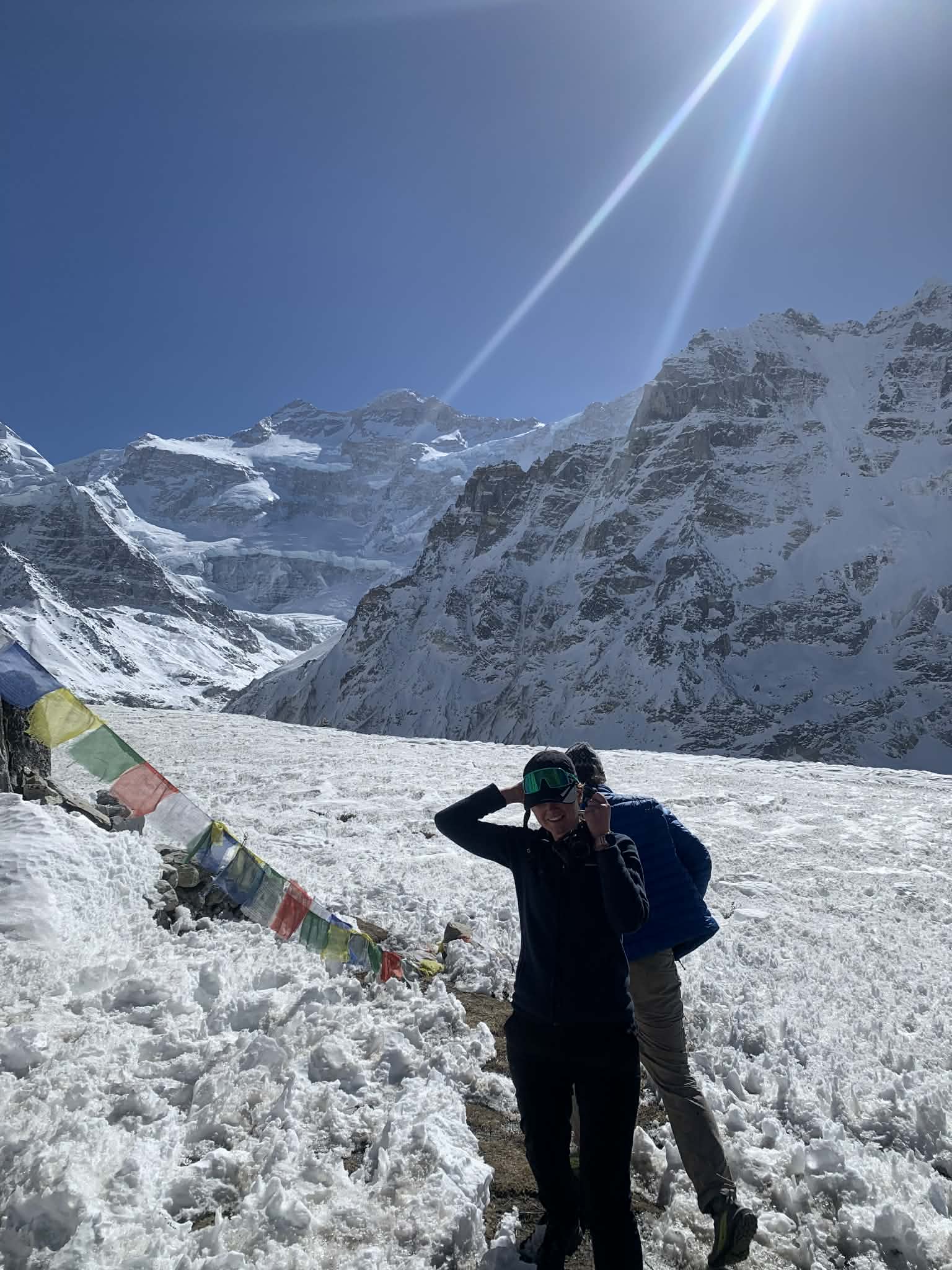
Kanchenjunga Circuit Trek Cost 2026/2026
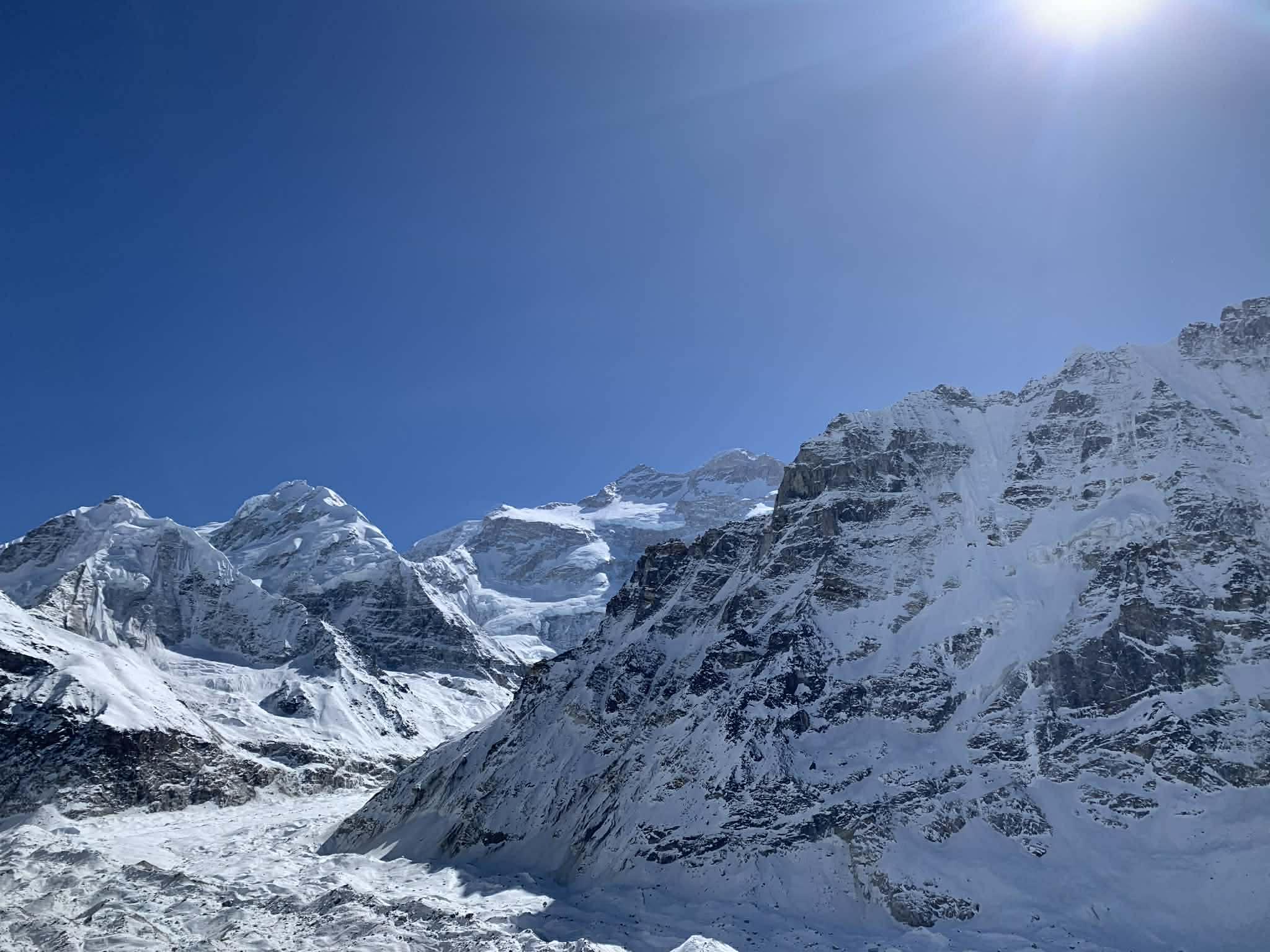
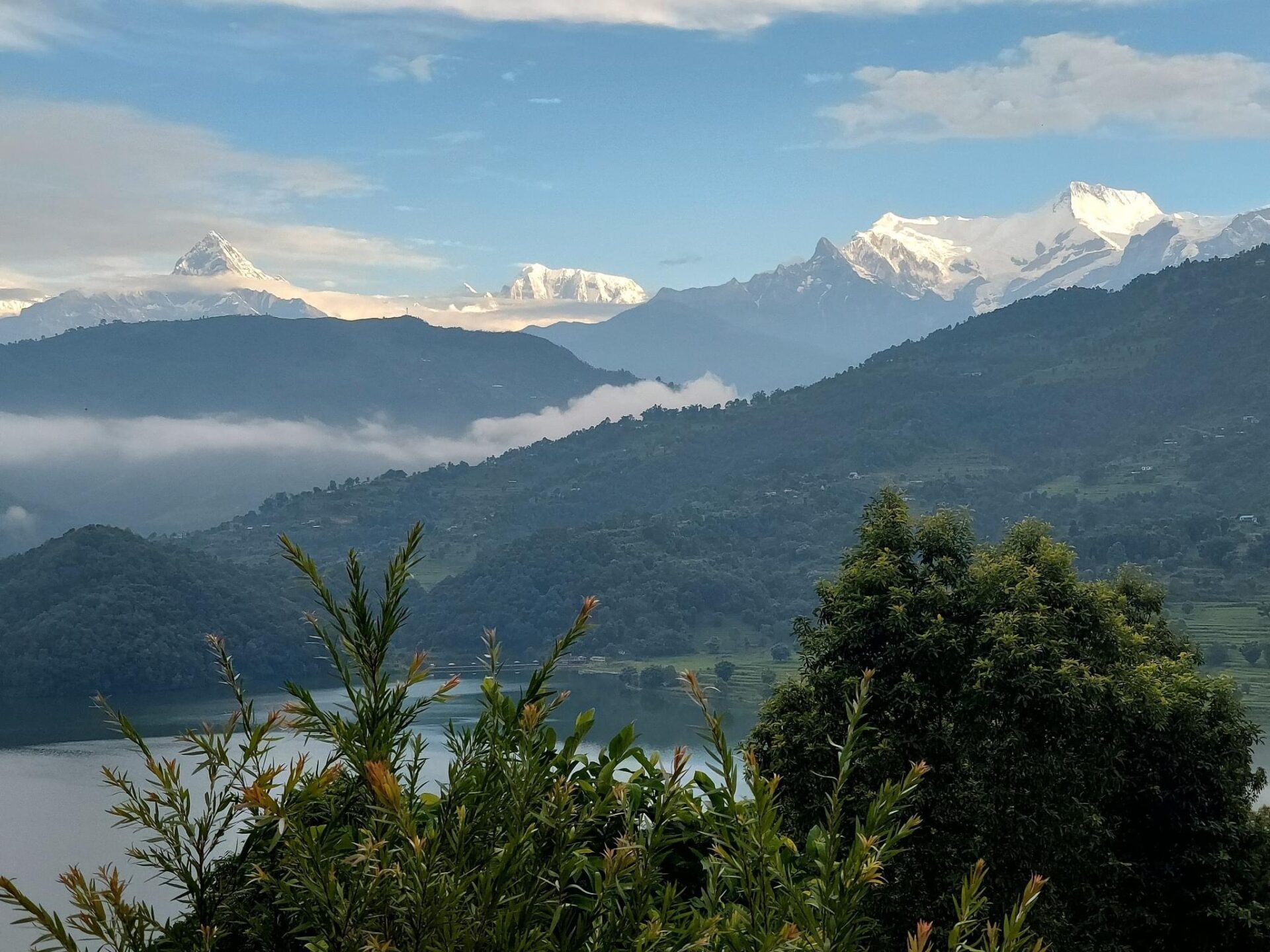
Affliations
We are Associated and Certificied with


